Hawaiʻi can work very well with a baby or toddler, but the trip becomes easier when you stop planning as if a small child is simply an adult who walks more slowly. Sleep, shade, meals, car seats, beach safety, and the distance back to the room should shape the itinerary.
A good family day often has one main outing, one easy meal plan, and one guaranteed opportunity to rest.
Choose the island and base for easy returns
Oʻahu is often the simplest first trip for families who want short urban trips, many restaurants, pharmacies, medical services, and beaches close to lodging. Maui can work well from a resort or condo base. Kauaʻi rewards a slower pace. Hawaiʻi Island requires the most deliberate driving plan.
Our first-island comparison and Hawaiʻi with kids guide can help narrow the decision.
A kitchen or kitchenette can be worth more than a fancy lobby
For young children, easy breakfast, milk storage, bottle washing, snacks, and an early dinner can matter more than resort programming. Laundry is similarly valuable when swimsuits, spills, and wet towels accumulate.
Compare crib availability, blackout curtains, refrigerator size, elevator access, room layout, and the distance from parking to the room. Use our hotel-versus-rental guide for the bigger lodging decision.
Keep arrival day almost empty
After a long flight, you still have baggage, a rental car or transfer, grocery needs, check-in, and a child whose body clock may not match Hawaiʻi time. Plan one easy meal, a short walk, and bed. Do not make the first afternoon depend on a prepaid reservation.
Car seats can determine the vehicle
If you are bringing your own car seat, make sure the rental vehicle has enough room for it plus luggage and stroller. If renting a seat from the car company, confirm the exact type and availability. A “seven-passenger” vehicle may be far less useful once two car seats and several suitcases are installed.
Pick beaches for the child, not the postcard
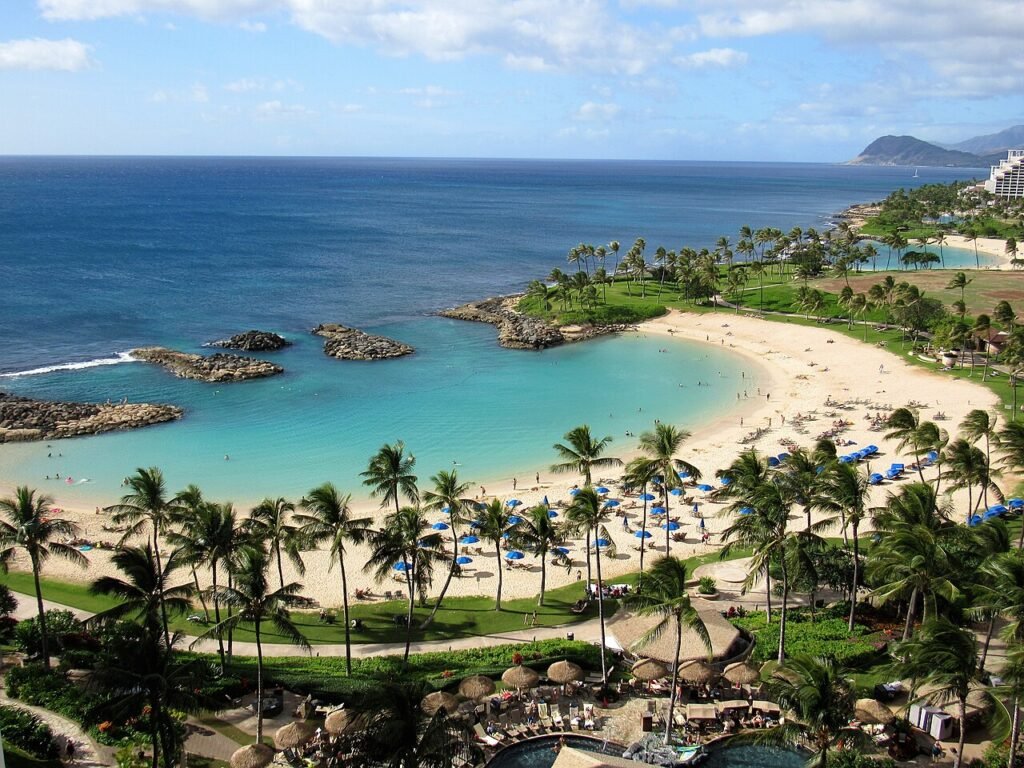
Protected lagoons and lifeguarded beaches are usually easier choices than exposed surf. Hawaiʻi Tourism Authority family guidance highlights places such as Ko Olina lagoons on Oʻahu and Lydgate Beach Park on Kauaʻi for younger children, but conditions still need to be checked on the day you go.
Keep toddlers within direct reach around water. Inflatable toys and puddle jumpers do not make rough surf safe. Read our ocean-safety guide before selecting a swimming day.
Shade is part of the activity
A beautiful beach with no shade can become a short stop with a baby. Pack a broad hat, lightweight sun-protective clothing, and a shade strategy that complies with the beach or property rules. Plan outdoor time earlier and avoid forcing a child through the hottest part of the afternoon.
Stroller or carrier?
A compact stroller is useful in Waikīkī, museums, resorts, paved paths, and airports. A carrier is often easier for stairs, gardens, uneven paths, and brief walks. Check attraction rules: some historic sites restrict personal strollers indoors.
Build the itinerary around naps without being ruled by them
If the child naps reliably in a carrier or stroller, use that flexibility. If naps require a dark room, choose accommodation close enough to return without turning each nap into a two-hour drive. One parent can also stay back while another does a longer hike or snorkel trip.
Boat tours need more questions than an age minimum
- Is there shade?
- Is there a restroom?
- Can a stroller come aboard?
- What happens if the child becomes seasick?
- Can one adult remain on the vessel while another enters the water?
- How long are you away from the harbor?
A realistic day with a toddler
Breakfast early, complete the main outdoor activity before midday, eat lunch before everyone is exhausted, return for a nap or pool break, then choose a short sunset walk or early dinner. That rhythm will often produce more pleasant memories than trying to fit three famous attractions into one day.
Sources and review
Reviewed October 25, 2026 using Hawaiʻi Tourism Authority family-travel guidance plus the ocean-safety, accessibility, transport, and attraction resources linked throughout this guide. Confirm airline, car-seat, hotel, and tour policies directly for your child’s age and equipment.