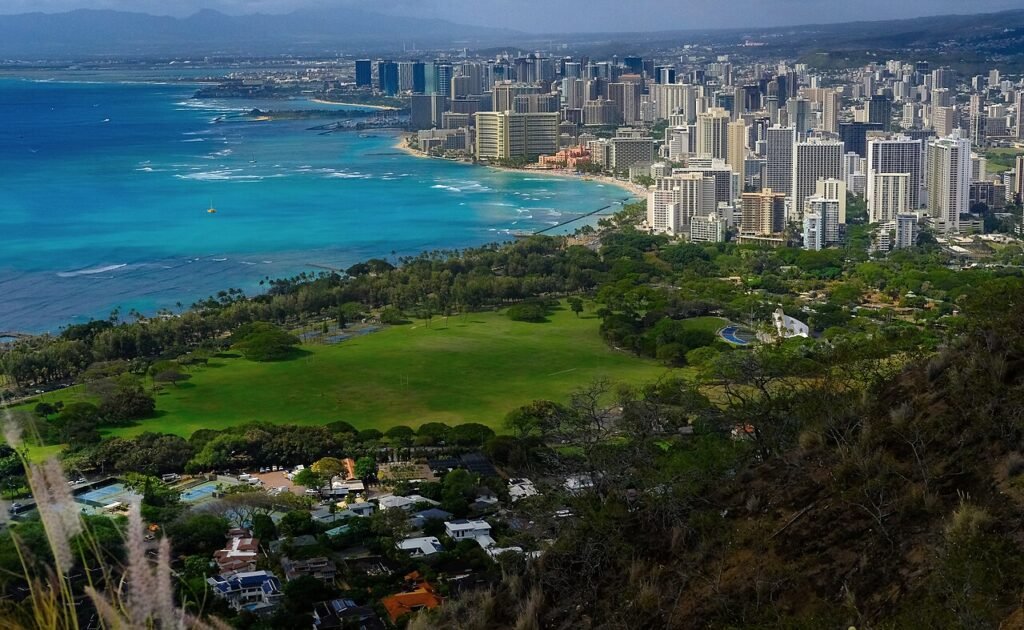
Hawaiʻi can be an excellent solo destination because you can build a trip around one person’s pace. You can spend three hours in a museum, turn around on a trail without negotiating, choose a small-group tour, or eat dinner early without coordinating a group.
The biggest solo-planning advantage is flexibility. The biggest risk is assuming that flexibility removes the need for a transportation, ocean, or hiking plan.
Oʻahu is usually the easiest first solo island
Waikīkī and Honolulu offer walkability, frequent transit, rideshare, many restaurants, museums, beaches, and organized tours. You can build several days without a rental car, which reduces the pressure of driving and parking alone.
Maui can work well from a resort base; Kauaʻi is ideal for a quieter outdoor trip if you are comfortable with a car; Hawaiʻi Island rewards independent road-trippers but requires the most driving. Use our island comparison before booking.
Stay somewhere that makes evenings easy
Solo travelers often benefit from being able to walk to dinner, coffee, and a safe public area after dark. A cheaper room far from everything may create repeated rideshare costs or long drives when you are tired.
Check parking, front-desk hours, the route from the room to the street, and whether you feel comfortable returning after dinner. Location can be more valuable than room size when you are traveling alone.
You do not need to rent a car every day
A partial-car itinerary can work especially well solo. Use transit and walking for city days, then rent a car for one or two geographically focused outings. Our car-free Hawaiʻi comparison explains the tradeoffs by island.
Small-group tours can solve two problems at once
A guided tour can provide transportation and company for activities you do not want to attempt alone. That can be useful for boat trips, cultural interpretation, remote roads, or an activity where you prefer to have staff nearby.
Choose the tour for its safety, access, group size, and guide quality—not simply because it markets itself to solo travelers. Our tour-evaluation checklist gives you useful questions to ask.
Ocean safety becomes more important alone
Do not snorkel or swim alone at an unfamiliar beach simply because the water looks calm. Maui County and statewide ocean-safety guidance consistently recommend swimming in lifeguarded areas and avoiding solo water entry.
If snorkeling is a priority, a guided boat or shore experience can be a better solo choice than swimming far from shore without a partner. See our first-time snorkeling guide.
Remote hikes require a check-in plan
For longer or remote hikes, tell someone where you are going and when you expect to return. Download the official route before leaving service, start early enough to return in daylight, and turn around when weather or footing changes.
A solo trip is not the time to follow an unverified social trail because other cars are parked nearby. Use legal managed routes and our hiking-safety guide.
Protect the basics
- Do not leave valuables visible in a parked vehicle.
- Keep a charged phone and backup battery on long days.
- Know how you are getting back before an evening activity.
- Use the same situational awareness you would in any unfamiliar city or trail system.
- Keep copies of key travel documents accessible online.
- Do not advertise an empty room or exact solo itinerary publicly in real time.
Eating alone is easier when you choose the format
Counter-service restaurants, food halls, hotel bars, cafés, farmers markets, and restaurants with bar seating can make solo meals easy. If a particular dinner matters, reserve it rather than assuming one person will always be squeezed in.
A good solo itinerary leaves room to change your mind
Book the few reservation-sensitive experiences, then keep some afternoons open. One of the advantages of traveling alone is being able to stay longer in a place you enjoy or abandon a plan that does not feel right without disappointing anyone else.
Sources and review
Reviewed October 25, 2026 using current Hawaiʻi Tourism Authority transport and island-planning resources plus official ocean- and trail-safety guidance. Service levels, trail access, and local conditions can change.