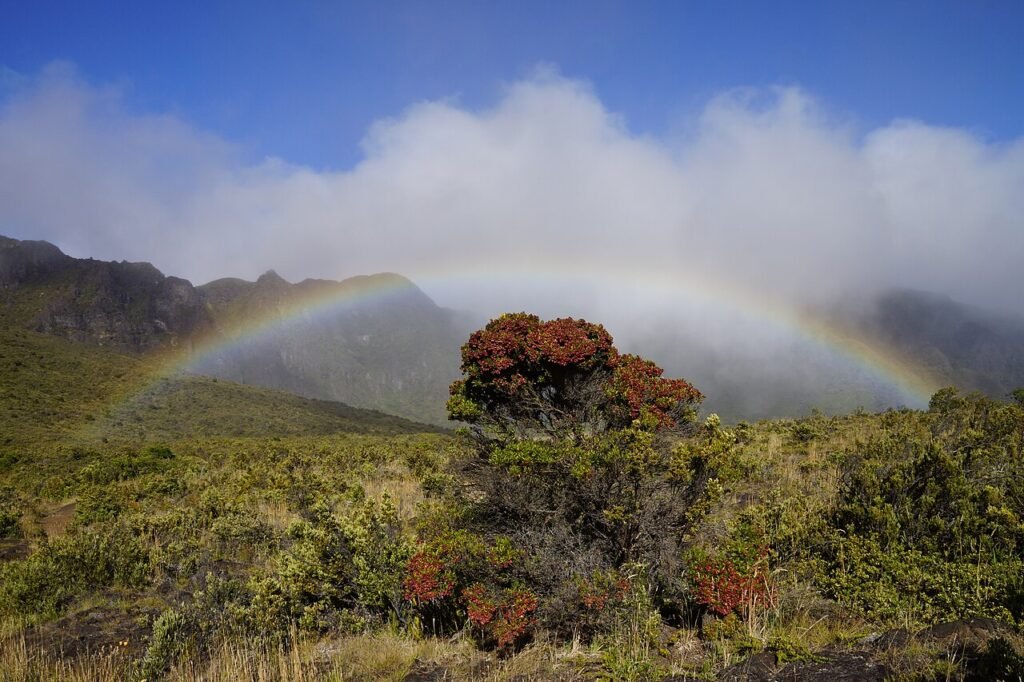
Waiheʻe Ridge Trail is one of Maui’s best-known ridge hikes because the route climbs from pasture into wet forest and opens to views over Waiheʻe Gorge, Makamakaʻole Gulch, central Maui, and the West Maui Mountains.
The trail is scenic, but it is not easy. Hawaiʻi DLNR lists it as a 2.5-mile pedestrian trail with about 1,563 feet of elevation gain. That means roughly five miles round trip with a sustained climb on the way up.
Official trail basics
| Plan for | Official information |
|---|---|
| One-way distance | 2.5 miles |
| Elevation gain | About 1,563 feet |
| Difficulty | Moderate |
| Summit elevation | About 2,563 feet |
| Drinking water | None on trail |
| Camping | Not permitted |
Clouds can erase the view
DLNR specifically notes that summit weather varies from clear to overcast with showers. A blue sky near the coast does not guarantee a clear ridge. That is part of hiking on Maui’s windward side.
If the ridge is buried in cloud before you begin, decide whether the exercise and forest are enough reason to hike. Do not push into worsening rain merely because you drove to the trailhead.
Mud can change the difficulty
The trail enters wet forest, and muddy sections can make both the climb and descent slower. Wear footwear with traction and expect it to get dirty. A walking stick or trekking pole can help some hikers with balance, especially on the descent.
Our Hawaiʻi hiking gear guide explains when trail shoes and traction matter more than waterproof marketing.
Parking is limited enough to plan around
Waiheʻe is popular, so an early arrival usually makes the day easier. Park only in designated areas and do not block gates, road access, or pasture operations. If the legal parking is full, come back later rather than creating a shoulder space.
This is also a hunting landscape
DLNR notes that hikers may encounter hunters off trail and recommends staying on the route and wearing bright-colored clothing. Treat this as a managed public-land environment rather than a private hiking attraction.
Bring your own water
There is no drinking water on the trail. Carry enough for a five-mile round trip with substantial elevation gain, even if the weather feels cool. Humidity and climbing can increase fluid needs without the dry heat people associate with dehydration.
Who should choose another trail?
- Travelers with knee or balance limitations
- People uncomfortable with muddy steep terrain
- Groups starting too late to finish in daylight
- Hikers without enough water
- Anyone expecting a short viewpoint walk rather than a sustained ridge climb
Fit Waiheʻe into the trip carefully
Make this the major physical activity of the day. Pair it with lunch or a low-effort stop rather than a second strenuous trail. If the group wants a more accessible coastal walk, consider the Kapalua coast instead.
Start early for more than parking
An earlier start can reduce heat, give you more daylight, and improve the chance of reaching viewpoints before afternoon cloud thickens. It does not guarantee a clear summit, but it gives the group more options if the climb takes longer than expected.
The downhill is where mud becomes obvious
A hiker can power uphill through slippery ground and then discover on the descent that every muddy step requires control. Keep enough energy for the way back, shorten your stride, and let faster hikers pass where the trail is wide enough to do so safely.
Do not chase a cloud opening onto unsafe ground
When visibility briefly improves, stay on the established trail rather than stepping onto a steep grassy edge for a photograph. Ridge weather can close in again quickly, and wet grass can be much more slippery than the main tread.
Plan the drive after the hike
Wet shoes, tired legs, and hunger can make the rest of a sightseeing day less enjoyable. Keep dry footwear or a towel in the vehicle, choose a nearby meal, and avoid scheduling a long winding-road drive immediately after a strenuous outing if the driver is exhausted.
Sources and review
Reviewed October 26, 2026 using Hawaiʻi DLNR Nā Ala Hele Maui trail information. Trail conditions, access, parking, and storm impacts can change; check current DLNR notices before hiking.