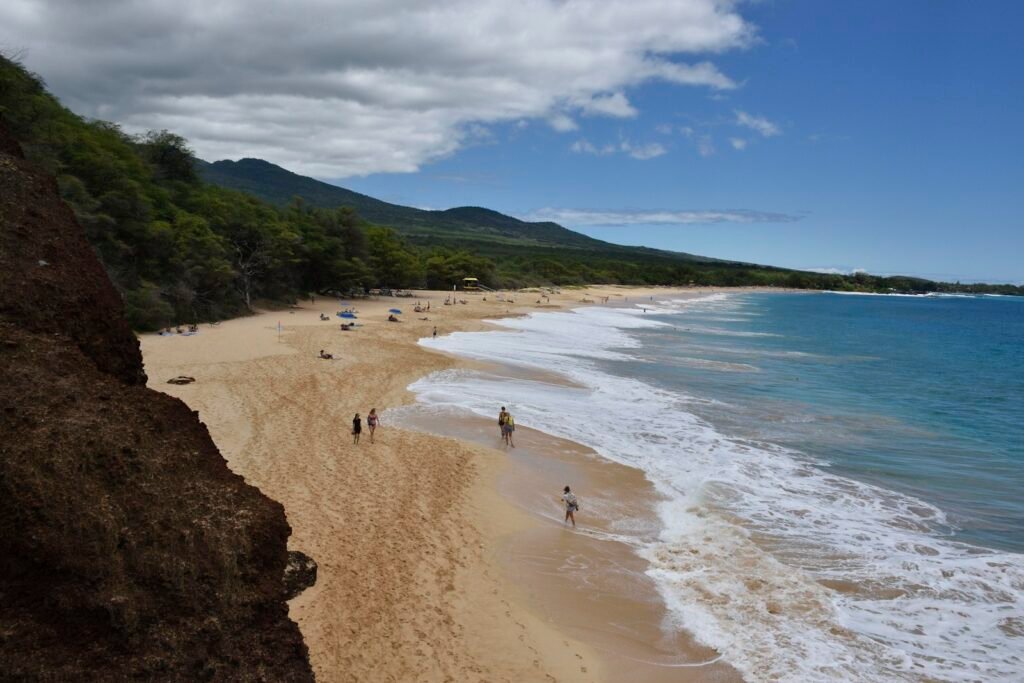
Mākena State Park’s Big Beach is wide, dramatic, and easy to underestimate. The same open shoreline that makes the beach visually impressive can produce powerful shorebreak that is dangerous even when the water looks inviting from the parking area.
Treat Big Beach as a place where the ocean gets to decide the activity. A day can still be worthwhile when swimming is not.
Mākena State Park planning essentials
| Plan for | Current information |
|---|---|
| Regular park hours | 5 a.m.–7 p.m. |
| Summer closing | Published state schedule extends to 7:45 p.m. in May, June, and July |
| Nonresident entry | $5 per person |
| Nonresident parking | $10 per vehicle |
| Drinking water | No drinking water listed by the state park |
| Main safety issue | Dangerous shorebreak and changing surf |
Big Beach shorebreak deserves respect
Hawaiʻi DLNR specifically warns about dangerous shorebreak at Mākena. Shorebreak can drive a swimmer or bodyboarder into shallow sand with enough force to cause serious neck, back, or head injuries.
Do not use the number of people in the water as your safety test. Watch the surf pattern, read the signs, and ask the lifeguards what they are seeing that day.
Lifeguards help, but they do not make conditions safe
Maui County currently includes Big Beach in its Ocean Safety coverage. Lifeguard staffing and hours are operational details that can change, so use the tower and posted information when you arrive rather than planning a difficult swim around a published schedule.
If the guards recommend staying out, change the plan. Our Hawaiʻi ocean-safety guide explains why shorebreak is a different hazard from a rip current.
Bring water before you reach the sand
The state park currently lists no drinking-water service. Maui heat and strong sun can make a beach session more dehydrating than expected, especially if you arrive after another outdoor activity.
Pack enough water for your group and do not rely on finding a convenient refill point after parking.
The fee structure matters for a short stop
For nonresidents, the current state charges both per-person entry and vehicle parking. If you are considering only a brief photo stop, decide whether that cost and driving time are worth it for your itinerary.
If Big Beach is one of the main experiences you want, give it enough time to justify the trip rather than squeezing it between unrelated reservations.
Keep Little Beach and informal shortcuts out of assumptions
Do not treat social-media directions, old access descriptions, or unofficial paths as authoritative. Follow current state signs, boundaries, and park notices.
Rules and access can change after weather events, management decisions, or safety concerns. The state park page should be the starting point before departure.
Pair Mākena with a South Maui plan
Mākena makes the most logistical sense when you are already staying or spending the day in South Maui. Use our Maui accommodation-area guide to see how Wailea, Kīhei, West Maui, and Upcountry change ordinary drive times.
If you are planning a full week, the Maui seven-day itinerary helps keep beach time separate from the island’s longer driving days.
Who should be especially cautious at Big Beach
Young children, inexperienced ocean swimmers, people with neck or back vulnerability, and anyone unfamiliar with shorebreak should be extremely conservative. The hazard occurs where many visitors feel safest—close to shore.
If waves are pitching hard onto the sand, watching from a dry position can be the correct activity even when lifeguards are present.
Plan for heat as well as water
Mākena can feel exposed and hot. Bring water, shade or sun protection, and footwear suitable for hot surfaces. Do not arrive after several hours of hiking with an empty bottle and assume the beach will provide everything you need.
Because the state lists no drinking-water service, your group should have enough water before leaving the vehicle area.
A beach day does not need to prove anything
Big Beach’s size and surf can make it tempting to enter because other visitors are doing so. Your trip does not improve because you took a bigger wave or stayed in longer than was comfortable.
Use the beach according to current conditions: swim when appropriate, watch when it is not, and keep the day enjoyable enough that you still have energy for the drive home.
Sources and review
Reviewed October 30, 2026 using Hawaiʻi DLNR’s official Mākena State Park page and Maui County Ocean Safety information. Recheck state park notices, fees, hours, and same-day surf before travel.
Featured photograph: Maui beach context image. Photo by Mario Mesaglio / Unsplash; it is not evidence of current Mākena surf conditions.