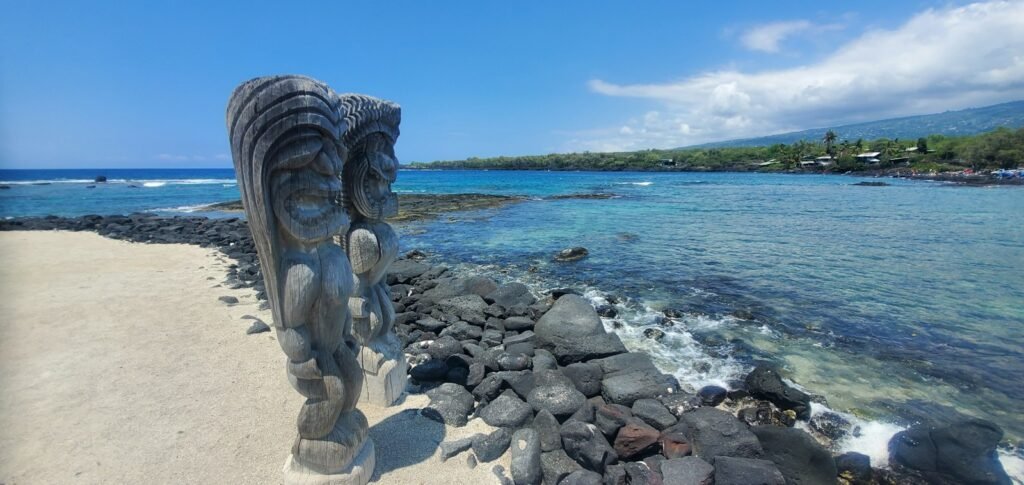
Kahaluʻu Beach Park is one of Kona’s best-known beginner snorkeling areas because a shallow reef puts marine life close to shore. That accessibility also makes the reef vulnerable to fins, standing, crowding, sunscreen, and heavy use.
A good visit starts with one rule: the reef is the reason you came, so protecting it is part of the activity.
Kahaluʻu planning essentials
| Plan for | Current information |
|---|---|
| Main activity | Shore snorkeling and swimming when conditions are suitable |
| Marine life | Coral reef, reef fish, and possible green sea turtle sightings |
| Regular maintenance | County schedule currently closes the park until 10 a.m. on the first Thursday of each month |
| Coral protection | Temporary full closures can occur during coral-spawning periods |
| Decision on arrival | Check lifeguards, surf, visibility, warnings, and any posted closure before entering |
Coral spawning can close the entire bay
Hawaiʻi County closed Kahaluʻu Beach Park from May 1 through May 10, 2026 to protect cauliflower coral during its spawning period. That closure was specific to 2026 and should not be copied forward as next year’s schedule.
If you are traveling in spring, check current county announcements before building a snorkeling day around Kahaluʻu. A conservation closure is not an inconvenience to work around; it is part of keeping the reef functional.
Monthly maintenance can affect early-morning plans
The county’s current maintenance calendar lists Kahaluʻu as closed until 10 a.m. on the first Thursday of each month. Confirm your exact date because maintenance schedules can change.
If your only available morning overlaps a closure, move the activity rather than arriving and waiting in the parking area.
Do not stand on the coral
Coral is living habitat, not a rock platform. Keep your body horizontal when snorkeling, maintain enough depth to avoid kicking the bottom, and use a controlled entry and exit.
If you are not comfortable floating without standing repeatedly, choose a different activity or remain in an appropriate sandy area. Our first-time snorkeling guide explains how to assess whether a shore snorkel fits your ability.
Give turtles space even when they swim near you
Green sea turtles may move through the bay. Do not follow, touch, block, or position yourself for a close photograph. The animal choosing to swim near you does not create permission to pursue it afterward.
Review NOAA-based guidance in our Hawaiʻi wildlife-distance guide.
Check the reef conditions before putting on a mask
Visibility, surge, crowding, and current can change. Speak with lifeguards and reef educators when they are present, and use posted warnings as current information rather than relying on a review written months earlier.
If the water looks rough or murky, a different Kona day is the better plan.
Kahaluʻu fits naturally into a Kona-based itinerary
The beach is most convenient when you are already staying on the Kona side. Use our Hawaiʻi Island base comparison to decide whether Kona, Kohala, Hilo, Volcano, or a split stay fits your trip.
If snorkeling is a priority across the whole vacation, compare Kahaluʻu with the permit and access considerations in our Kealakekua Bay guide.
A beginner-snorkeler checklist before entering
- Your mask seals comfortably without overtightening.
- You can breathe through the snorkel while relaxed in shallow water.
- You know where you will enter and exit without standing on coral.
- You understand the current lifeguard and reef-education guidance.
- You have a capable buddy and a conservative turnaround point.
If any of those pieces are missing, spend more time preparing on shore rather than solving the problem while floating above a reef.
Sun protection and reef protection can work together
Use shade, rash guards, hats, and other clothing to reduce the amount of exposed skin that needs sunscreen. For product choices, follow current Hawaiʻi and county law and the label directions rather than relying on “reef safe” marketing language.
Our Hawaiʻi sunscreen-law guide explains the statewide rule and stricter Maui County requirements.
Leave the reef as you found it
Do not collect coral, shells with living animals, or other marine life. Keep fins under control and avoid dragging equipment across shallow coral.
A successful Kahaluʻu visit is one where the reef, wildlife, and next visitor are not worse off because you were there.
Sources and review
Reviewed October 30, 2026 using the Hawaiʻi Tourism Authority’s official Kahaluʻu Beach Park information, Hawaiʻi County’s 2026 coral-spawning closure notice, and the county park-maintenance calendar. Verify future coral closures and maintenance dates before travel.
Featured photograph: South Kona coastline context. Photo by Stephen Wiggins / Unsplash; it is not a same-day image of Kahaluʻu.