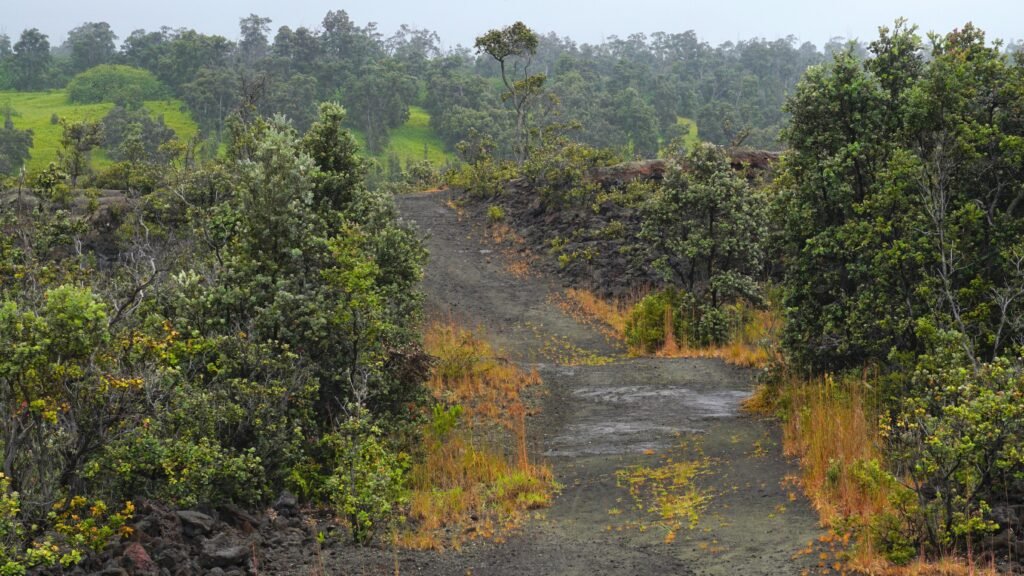
The Palm Trail is a good answer to a specific question: what should you hike in Kahuku if you want more than a quick viewpoint but not a major backcountry expedition? The route crosses pasture landscapes, older volcanic features and a lava channel associated with the 1868 eruption, giving the walk both scenic variety and a sense of the area’s layered history.
The National Park Service lists the Palm Trail at 2.6 miles (4.2 km) in a loop, with approximately 310 feet (95 m) of elevation change. It can be hiked or biked where the park allows. Treat the published figures as a baseline and adjust your time for terrain, wind, sun and stops. Review the NPS Kahuku trail details.
Why choose Palm over a short Kahuku loop?
Unlike Kamakapaʻa’s quick meadow rise, the Palm Trail commits you to a more extended circuit. The reward is a broader look at Kaʻū’s pastoral and volcanic setting. Your walk passes places shaped by both ranching and eruption, so pay attention to changes in rock texture, vegetation and the shape of the ground.
A short trail works if you are fitting Kahuku into a day of driving. Palm Trail is the better option when the walk itself is a major reason for stopping. Keep a time cushion rather than trying to finish at closing.
Trail surface and fitness expectations
Expect a natural trail, not resort landscaping or even pavement. Dirt, loose volcanic pieces and grass may all be encountered on a Kahuku hike. Wear sturdy footwear that you have already tested, and take breaks rather than rushing through the steeper portions.
Hikers who need fully accessible paths should not interpret a moderate total elevation change as a guarantee of wheelchair suitability. Check with park staff for route-specific accessibility information before choosing a hike.
The no-water rule changes your packing list
NPS states that potable water is unavailable in the Kahuku Unit. Carry sufficient water for the whole hike and some extra for delays. Bring a snack, sun protection and rain protection. Conditions on exposed slopes can vary from bright sunshine to cooling wind and showers. There is no reason to rely on shade or facilities appearing at the halfway point.
Start with your vehicle, keys and route settled. Download the park map in advance rather than expecting mobile navigation to replace trail signs.
Respect the habitat and the historic landscape
Keep to the designated trail; do not cut across grass or climb lava features to create a photograph. If you move on to a forest trail later, brush mud and plant matter from footwear first. The Kahuku Unit guide outlines access limits and biosecurity practices.
The Kahuku landscape also contains the record of generations of land use. Old ranch features are not souvenirs, and volcanic rocks should remain where you find them.
When Palm Trail is the wrong pick
Choose a shorter outing if someone in your group is short on water, uncomfortable with uneven ground or facing a tight schedule. Kamakapaʻa offers a half-mile alternative, while Puʻu o Lokuana offers a steep, shorter climb with a contrasting red cinder quarry.
Kahuku normally opens Thursday through Sunday, 8 a.m.–4 p.m.; confirm current hours and trail conditions before departure. A longer walk is not worth starting late simply because the park gate was open when you arrived.
Sources and review: November 2, 2026. NPS Kahuku Unit trail list and access information, NPS Palm Trail profile, and park alerts. Featured photo: National Park Service, public domain.