Hawaiʻi Island is large enough that transport should be part of your accommodation decision. If you want to explore both Kona and Hilo, visit Hawaiʻi Volcanoes National Park, and add a mountain or Kohala outing, a rental car is usually the most flexible option. A car-free trip can work, but it needs a narrower itinerary built around the routes and schedules that actually serve your base.
Start by choosing where you will sleep. Our Kona, Kohala, Hilo, and Volcano accommodation guide explains when one base works and when a split stay reduces repeated driving.
Hele-On routes and baggage guidance checked October 23, 2026. Schedules are approximate and can change with weather, road conditions, and service notices.
Why Hawaiʻi Island makes transport different
The island’s major visitor areas are far apart. A hotel in Kailua-Kona does not put Hilo, Volcano, or the Kohala Coast “nearby” in the way a map thumbnail can suggest. A split stay may save hours of repeated driving, but it adds a checkout, luggage transfer, and another check-in.
Before choosing a rental period, list your planned days by region:
- West: Kailua-Kona, Kealakekua, coffee farms, and nearby coast.
- Northwest: Waikoloa, Mauna Lani, Kohala resort areas, Waimea, and North Kohala.
- East: Hilo, gardens, waterfalls, and Puna.
- Volcano: Hawaiʻi Volcanoes National Park and the surrounding village area.
- High elevation: Maunakea planning requires separate health, vehicle, and road-condition decisions.
What Hele-On can do
Hawaiʻi County’s Hele-On system serves communities across the island, including routes between Hilo and Kailua-Kona, Volcano, South Kohala resorts, and several airports. It can be genuinely useful when the timetable matches your trip.
The county currently lists direct service to Hilo International Airport via Route 101 and to Ellison Onizuka Kona International Airport through several routes, including Route 2, Route 60, Route 75, Route 90, and Route 202. Route 202, for example, has frequent stops between central/north Kailua-Kona and the Kona airport.
That does not make Hele-On a substitute for a rental car on every sightseeing day. Some long-distance routes have only a small number of trips. Hawaiʻi County itself warns that schedules are approximate and can be affected by weather, traffic, and road conditions.
Check the baggage rule before using the airport bus
Hele-On allows up to five shopping bags, pieces of luggage, or packages, but they must be stored under the seat, in an undercarriage when available, on your lap, or otherwise out of the aisle. Large objects that cannot be safely stowed are not allowed, and bus operators cannot carry your bags for you.
Review the official baggage rules with the actual suitcases you plan to bring. A family with several full-size cases may find an airport transfer or rental car more practical even when a route serves the airport.
When a full-stay rental makes sense
Start by pricing a full rental when your itinerary includes several independent drives, especially if you plan to split between west and east. You collect the car once, keep luggage with you during the transfer, and avoid coordinating a new pickup in the middle of the trip.
A full rental is also useful for a stay in Volcano or another location where meals and attractions are dispersed. Check the property’s parking arrangements and your rental company’s road restrictions before committing.
When selected rental days can work
If you are spending several days in Kailua-Kona with walkable meals and a few prearranged tours, you may be able to rent only for the regional outings. The same can work in Hilo if your lodging fits your everyday needs and you arrange transport for the days that go farther.
However, do the pickup math. A cheap two-day rate is less attractive if you spend a morning traveling to an off-airport office or need a rideshare both ways. Compare the branch location, opening hours, exact pickup and return time, and whether one-way return is allowed.
Special case: Hawaiʻi Volcanoes National Park
Hele-On serves Volcano village and the broader area, but a national-park sightseeing day still needs careful route planning. The park itself is large, and the places you may want to see are not all concentrated at one bus stop.
For most first-time visitors, a car or an appropriate guided tour gives more flexibility inside the park. Use our one-day Hawaiʻi Volcanoes National Park guide to decide which areas you actually want to reach before choosing transport.
Special case: Maunakea
Do not treat Maunakea as an ordinary scenic drive. The Visitor Information Station is at 9,200 feet, and vehicle restrictions apply above it. Two-wheel-drive vehicles are not permitted on the summit road, and rental agreements may restrict high-elevation or unpaved-road use.
If Maunakea is a priority, choose the exact experience first—Visitor Information Station stargazing, summit sunset, or a permitted tour—then reserve the appropriate vehicle only if needed. Our Maunakea planning guide covers that decision.
Compare three transport plans
| Plan | Works best when | Watch for |
|---|---|---|
| Full-stay rental | Split stay or several regional day trips | Parking, fuel, one-way fees, rental restrictions |
| Selected rental days | Mostly local base with 2–3 independent outings | Pickup/return time and transfer costs |
| No rental | Compact itinerary with Hele-On and tours deliberately planned | Long route frequency, luggage, last return trip |
Build the complete transport cost
Do not compare only the daily rental rate. Add parking, fuel or charging, extra-driver fees if applicable, airport transfers, and any tours you would book specifically because they include transport. Keep refundable deposits separate from final expenses.
For a split stay, also compare whether returning the vehicle at a different airport or office changes the price. The seven-day Hawaiʻi Island itinerary shows one way to pair west- and east-side nights without a separate transfer day devoted entirely to driving.
A practical recommendation
For a first visit covering both coasts, start by pricing a rental for the full driving portion of the trip. If your itinerary turns out to be mostly Kona or mostly Hilo, test a shorter rental against the real cost and time of transfers. Go car-free only when your chosen lodging and activities genuinely fit Hele-On or organized transport.
Do the airport-to-base check before choosing a car-free arrival
For a no-car or partial-rental trip, write the airport journey as a complete chain: terminal → correct Hele-On stop → any transfer → walk to the accommodation → luggage handling. Use the current Hele-On schedules and baggage rules, then repeat the exercise for the return flight. If either direction is awkward, price a dedicated transfer instead of assuming the bus will be the cheapest practical option.
Also separate transportation from sightseeing. A bus can be useful for getting between communities without being a good way to reproduce a rental-car itinerary with multiple stops in one day.
Sources and review
Reviewed October 23, 2026 using Hawaiʻi County Mass Transit Agency route, airport, baggage, and rider guidance. Recheck route alerts and your rental contract before travel.
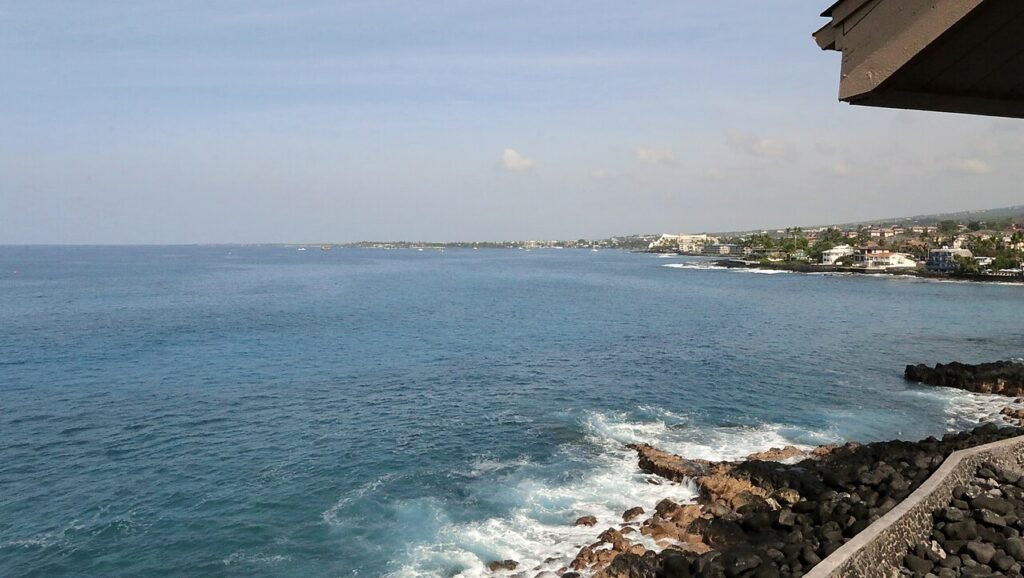
Featured photograph: Kona Bay and the Kailua-Kona shoreline, photographed in 2014. Robert Linsdell / Wikimedia Commons, CC BY 2.0.