The apple in a child’s backpack counts as fresh fruit, even if you bought it after airport security. The crackers in the next pocket are a manufactured food. If both are still in the bag when you fly from the continental U.S. to Hawaiʻi, declare the apple and have it ready for inspection. Travelers must complete the state declaration even when they have nothing to declare. A family may be able to share one form. Open the official Akamai Arrival form.
Who can go on the same form?
One adult can submit for family members in the same household traveling on the same flight when their home address and, if applicable, their lodging address match. A couple traveling with their children and staying together can use one form. Grandparents flying with them from a different home should complete their own, even if everyone booked the same condo. Read the state’s household and flight FAQs.
Sort the lunchbox before opening the form
| What is in the bag? | What to do on a mainland flight to Hawaiʻi |
|---|---|
| A fresh apple or a small bag of raw carrots | Declare fresh fruit and vegetables and present them for inspection. The quantity and the store where you bought them do not settle whether they can enter. |
| Factory-made crackers or cookies | Hawaiʻi exempts manufactured food products from declaration and inspection. A fresh apple in a store wrapper is still fresh fruit. |
| Fresh flowers or foliage for someone you’re meeting | Declare the plant material. Keep it accessible and check restrictions before buying a particular species. |
| A fresh pineapple or a packet of passion fruit seeds | The state lists these as restricted and requiring advance arrangements. For an ordinary vacation, leave them at home and buy fruit after arrival. |
If a gift or food does not fit one of these examples, check the specific item with the state before packing it. Plants with soil and live animals raise separate import questions. For a plant you want to bring, the Plant Quarantine Branch lists (808) 832-0566. Check Hawaiʻi’s mainland traveler and food rules.
Complete Akamai Arrival before departure
- Open the state site up to five days before your scheduled departure. Doing it at home lets you check a questionable item while you can still take it out of the bag.
- Have the airline, arrival details, home address, Hawaiʻi lodging address and number of people on your declaration handy. Check carry-ons, checked bags and anything packed by another family member.
- Select the items you are bringing, or the option for nothing to declare. Submit the form and save the confirmation on your phone so you can find it without a signal.
If you discover fresh produce after submitting, tell agricultural inspection staff when you land. This is especially easy to miss on a long connection, when someone buys lunch after another family member has already filled out the form.
What happens after landing?
Collect any checked bag containing an item you declared. The state directs passengers to present agricultural items at the agricultural inspection counter near the baggage-claim exits. Keep the fruit, flowers or other item within reach and follow staff instructions before leaving. Submitting the form records what you brought. The inspector determines whether an item can enter.
Flying directly to Hawaiʻi from another country? Follow U.S. Customs and Border Protection procedures for that arrival. Taking souvenirs back to the mainland is a different journey with its own checks. See what you can bring home from Hawaiʻi.
For the rest of the carry-on, use our first-trip Hawaiʻi packing checklist.
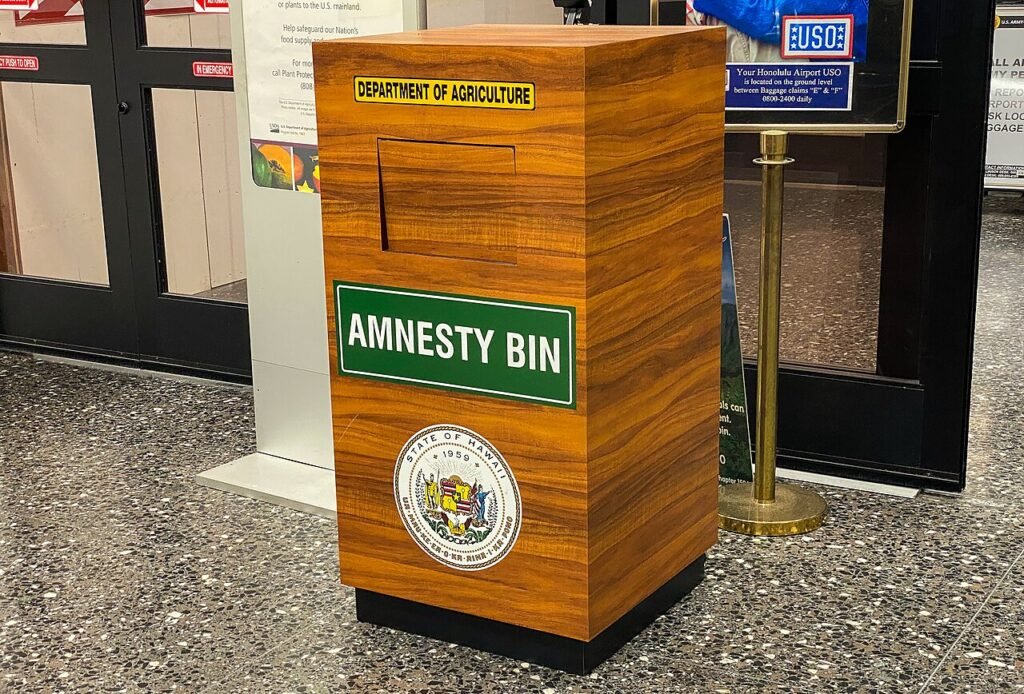
Airport photograph by Tony Webster, showing an agricultural amnesty bin at Honolulu in 2020. Resized for display under CC BY 2.0.
