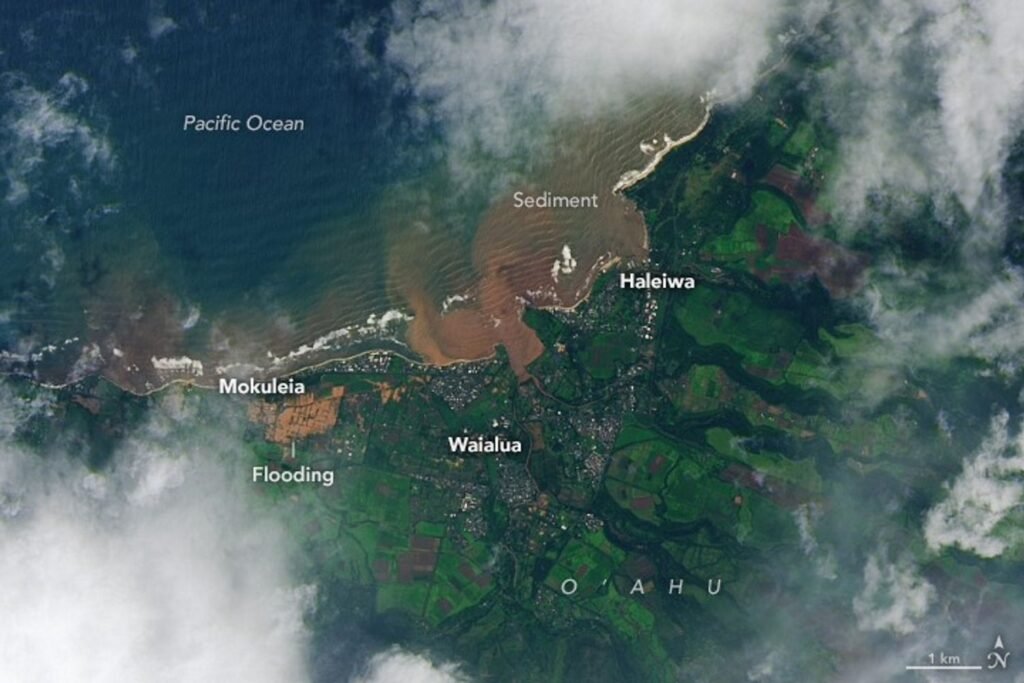
If water at your beach looks brown or unusually cloudy after rain, stay out, including wading at the edge. Hawaiʻi’s Department of Health gives that advice even when the beach has no posted advisory. If there is an active advisory for your stretch of coast, follow it even if the water in front of you looks clear. Check current Hawaiʻi water-quality advisories.
Read the notice for the water you plan to enter
- Open the state’s Clean Water Branch portal. In the water-quality advisories section, use the list or map of ongoing advisories. On a phone, the list can be easier to read than nearby map pins.
- Find your island, then read the full location description. A notice may cover a bay, a stretch between two landmarks or much of an island. Your hotel’s beach name might never appear in the headline.
- Check the type of notice, the area it covers and whether it is ongoing or canceled. Reopen the notice before heading out if you first looked the night before. A screenshot from someone else’s trip tells you little about today.
What the different notices mean
| What you see | How to use it |
|---|---|
| Brown water advisory | Rain can wash soil, animal waste and other pollutants into the ocean. Stay out of affected water. Rain uphill can reach a sunny shoreline through a stream or storm drain. |
| Sewage spill notice | Read the named waterways, boundaries and health instructions. Avoid contact with affected water and wait for the state’s update. Its color alone tells you little about contamination. |
| High bacteria notification | A sample exceeded the state’s action threshold and follow-up testing may be underway. Read the latest update before choosing a swim spot. A notification can appear online without signs on the sand. |
| No active notice at your beach | Beaches are sampled at different intervals. Check the water and posted signs when you arrive. Brown or turbid water is reason to skip entry regardless of what the map shows. |
A decision you might face at Hanalei Bay
Imagine a clear morning after overnight rain in the mountains. From the sand, you can see a muddy plume where the river meets the bay. First read any active notice for Hanalei and its boundaries. If it covers your planned swim area, keep everyone out. If the map has no notice but the water at your entry is discolored, keep everyone out there too. Walking a few yards along the sand is no reliable way to locate the edge of contamination.
A family can still watch the bay from a permitted dry area if local conditions allow. Keep children out of runoff channels crossing the beach, and respect any posted closure. If the point of the outing was to snorkel, swap in a land activity instead of spending the morning chasing a patch of blue. Find rainy-day alternatives by island.
When should you check again?
Use the state’s cancellation or updated instructions and reassess what you see at the beach. Rainfall, stream flow and the shoreline vary too much to use a single number of hours as a countdown. The state portal also offers email updates. Read the Department of Health’s guidance on storm runoff and spills.
Water quality is one decision. Swell, currents and shorebreak are another. Even after a water-quality notice ends, check posted ocean warnings and speak with a lifeguard about the day’s surf before entering. Read the Hawaiʻi ocean safety guide and how the state monitors beaches.
The satellite image shows runoff near Waialua, Oʻahu, on March 14, 2026. Lauren Dauphin, NASA Earth Observatory, using U.S. Geological Survey Landsat data. It illustrates a past event. Use the state map for today’s conditions. See the before-and-after images.