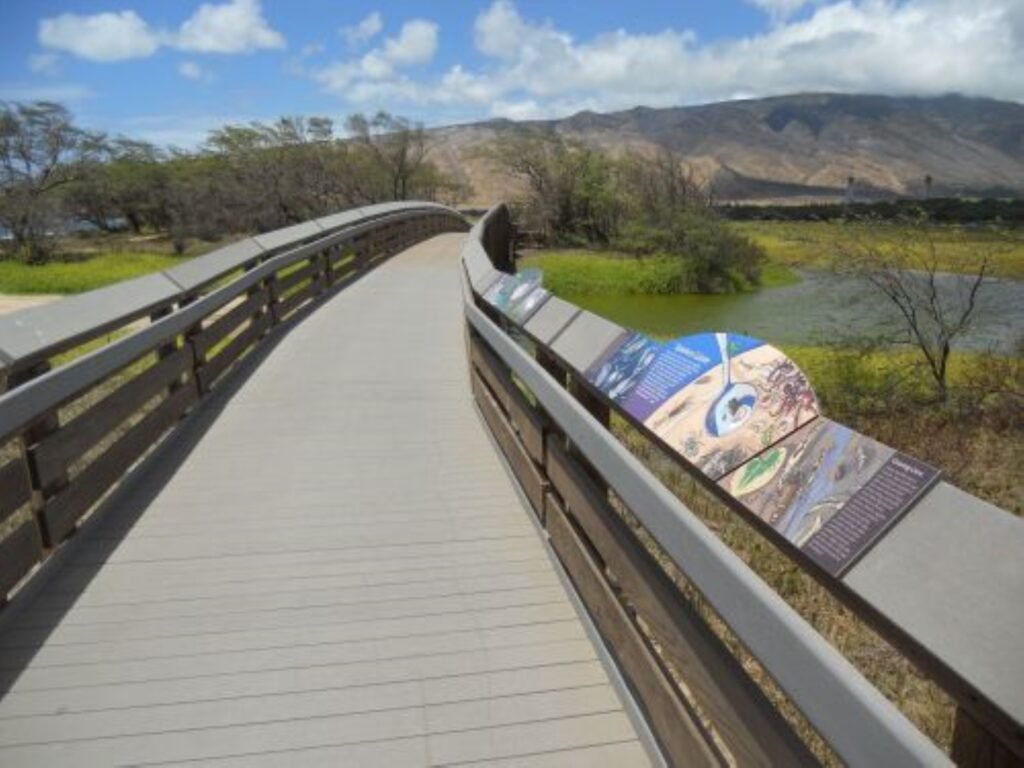
There are two places to park for birdwatching at Keālia Pond, and a navigation search for the refuge may send you to the wrong one. For a short walk beside the wetlands between Kīhei and Māʻalaea, search for Keālia Coastal Boardwalk. For exhibits, staff and the Kanuimanu Ponds, search for Keālia Pond National Wildlife Refuge Visitor Center on Maui Veterans Highway.
Choose your entrance before you drive
| Planning detail | Coastal boardwalk | Visitor center and Kanuimanu Ponds |
|---|---|---|
| Directions | North Kīhei Road between Kīhei and Māʻalaea. Use the designated boardwalk lot, which the refuge lists as having 14 spaces. | Milepost 6 on Maui Veterans Highway (Highway 311), about a mile north of Kīhei. Follow the refuge entrance to the visitor-center lot. |
| Best use | A short birdwatching stop, a weekend outing or a visit on the way between South Maui and Māʻalaea. | A weekday morning with time to ask about recent sightings and walk the levees around the managed ponds. |
| Walking surface | A raised boardwalk. The refuge trail list gives its length as 0.39 mile. Leave time to retrace your steps to the car. | The levees are mostly level, but the refuge describes the surface as bumpy. Ask about current conditions if wheels or uneven ground are a concern. |
Save the entrance name along with the map pin. If you want to use both entrances, plan them as separate stops with a drive between the parking areas. See official driving directions and the refuge trail guide.
When the schedule changes your choice
The refuge lists the coastal boardwalk for daily access, including federal holidays. The office, visitor center and main refuge grounds have separate schedules. The agency’s visitor and rules pages give different early opening times for the boardwalk and different Monday hours for the center. If being there at first light matters, or you want to go inside on a Monday or Saturday, call the refuge at (808) 875-1582 before driving over. Allow time to return to the lot ahead of the posted gate closure. Check the refuge’s current visitor information.
Two birds to look for before moving on
Watch the shallow edges for an aeʻo, the Hawaiian stilt. Its long legs and slender bill are good clues, even from a distance. Then look on the water for an ʻalae keʻokeʻo, the Hawaiian coot, a darker, compact bird with a pale bill and forehead. The refuge provides feeding, resting and nesting habitat for both endangered birds. In winter, scan groups of ducks for migrants such as northern shovelers and northern pintails. Read about the refuge’s wetland birds.
For a family’s first visit, try standing still at one spot for five minutes. Give one person the job of watching the muddy margin and another the open water, then swap. A pair of binoculars makes this easier than trying to get closer. Keep to the designated route and give birds room to feed. Pets and drones are prohibited. Read the refuge rules.
How much of your Maui day to set aside
As a planning estimate, give the boardwalk 30–45 minutes if you want a few unhurried stops to watch birds. Allow about an hour or more on the visitor-center side if you want exhibits and pond time. Sightings depend on water levels, season and where birds are feeding. A packed boardwalk lot is a good reason to come back later or try the visitor-center side during its open hours.
Staying in South Maui? The boardwalk can fit into the same half day as a confirmed visit to Maui Ocean Center in Māʻalaea. Or use it as the one planned outing on the flexible day in our seven-day Maui itinerary.
Boardwalk photograph by the U.S. Fish and Wildlife Service, public domain. View the original refuge photograph.