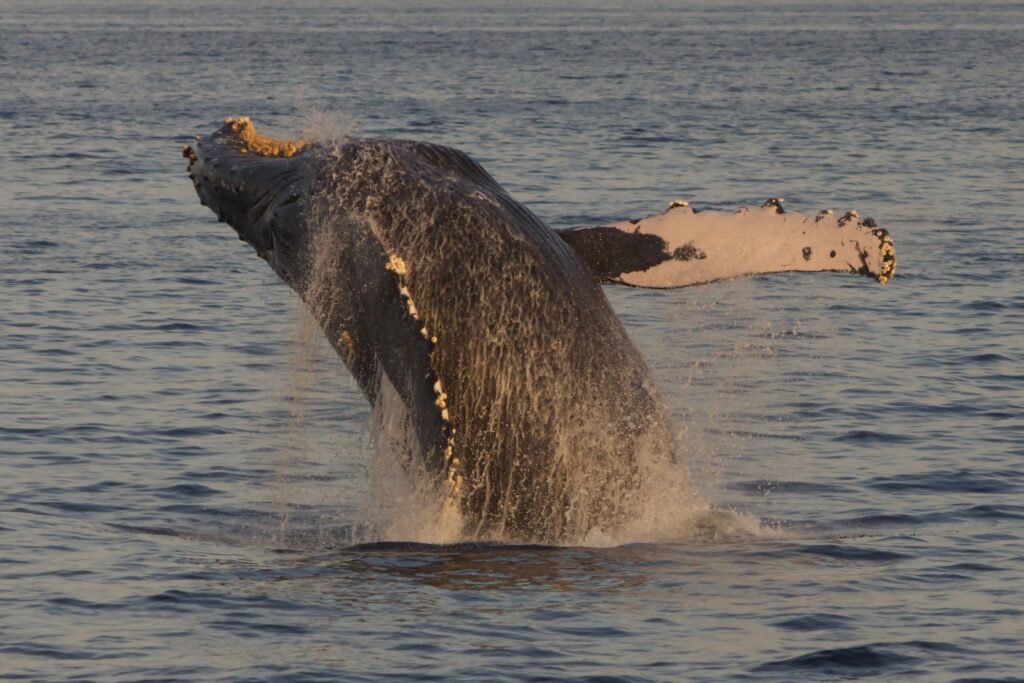
A wildlife encounter in Hawaiʻi gets better—not worse—when you give the animal room. The most useful thing to know before a beach, boat, snorkel, or coastal hike is that different species have different viewing distances, and some of those distances are federal regulations rather than suggestions.
Use a camera zoom or binoculars instead of moving closer. If an animal comes toward you, do not turn that into permission to touch, follow, block, or surround it.
The Hawaiʻi distances to remember
| Animal | Distance | Status |
|---|---|---|
| Sea turtles | At least 10 feet | NOAA Hawaiʻi recommended viewing distance |
| Hawaiian monk seals | At least 50 feet | NOAA Hawaiʻi recommended distance |
| Monk seal mother and pup | At least 150 feet | NOAA Hawaiʻi recommended distance |
| Spinner dolphins | 50 yards | Federal rule prohibits swimming with, approaching, or remaining within 50 yards |
| Other dolphins / small whales | At least 50 yards | NOAA recommended distance |
| Humpback whales | 100 yards | Federal approach rule in Hawaiʻi |
Recommendations and laws are not the same thing
NOAA’s Hawaiʻi guidance recommends 10 feet for turtles and 50 feet for monk seals. Those recommended distances help visitors avoid behavior that could become harassment. The spinner-dolphin 50-yard rule and humpback-whale 100-yard rule are federal regulations and are enforceable.
The safest visitor habit is simple: never treat the minimum distance as a target. More space is usually better.
If a turtle or monk seal is resting on the beach
Do not form a semicircle around it, place children next to it for a photo, or stand between the animal and the ocean. Stay behind posted barriers. Keep dogs controlled. Resting is normal behavior; your job is to let the animal continue doing it. On coastal hikes such as Kaʻena Point on Oʻahu, stay on marked paths and protect ground-nesting seabirds as well as resting seals.
For monk seals, NOAA suggests a “rule of thumb” when no barrier is present: extend your arm and see whether your thumb can cover the animal from view. If it cannot, move farther away.
Spinner dolphins are not a swim-with attraction
Spinner dolphins use Hawaiʻi’s sheltered nearshore waters to rest during the day. Federal law prohibits swimming with them and prohibits approaching or remaining within 50 yards in covered Hawaiʻi waters. A tour that advertises close interaction with wild spinner dolphins should be a warning sign, not a selling point.
Humpback whales need 100 yards
In Hawaiʻi, federal rules prohibit approaching humpback whales within 100 yards by boat, kayak, paddleboard, while swimming, by drone, or other means. If a whale approaches your vessel, the operator should follow NOAA procedures rather than maneuvering closer for a better photo.
Our Hawaiʻi whale-watching guide compares shore and boat viewing without making close encounters the goal.
Never touch, feed, chase, or block
- Do not feed fish, turtles, dolphins, seals, or whales.
- Do not chase an animal with a camera, kayak, paddleboard, drone, or boat.
- Do not touch a turtle because it appears calm.
- Do not cross a seal barrier for a photograph.
- Do not stand on coral while watching marine life.
- Do not ask a guide to break distance rules for your group.
What if the animal approaches you?
Wild animals control their own movement. If one closes the distance, avoid sudden pursuit or interaction. In the water, create space when you can do so safely. On a vessel, follow the captain and NOAA guidance. The fact that an animal approached does not authorize touching or following it.
Choose operators whose behavior matches their marketing
Before booking a wildlife tour, ask how the operator handles minimum distances, what happens when animals approach the vessel, and whether guides stop guests from entering the water around protected species. Use our sustainable-tour evaluation guide to compare those answers.
Report an injured animal or suspected harassment
NOAA’s Hawaiʻi wildlife-viewing page lists the statewide marine wildlife hotline as 888-256-9840 for sick, injured, stranded, or dead marine mammals and sea turtles. Suspected illegal activity can be reported through the federal enforcement and Hawaiʻi DLNR channels listed there.
Sources and review
Reviewed October 24, 2026 using NOAA Fisheries Hawaiʻi-specific marine wildlife viewing guidance. Distances differ by species and can include either recommendations or enforceable rules; use the current NOAA page when planning wildlife encounters.