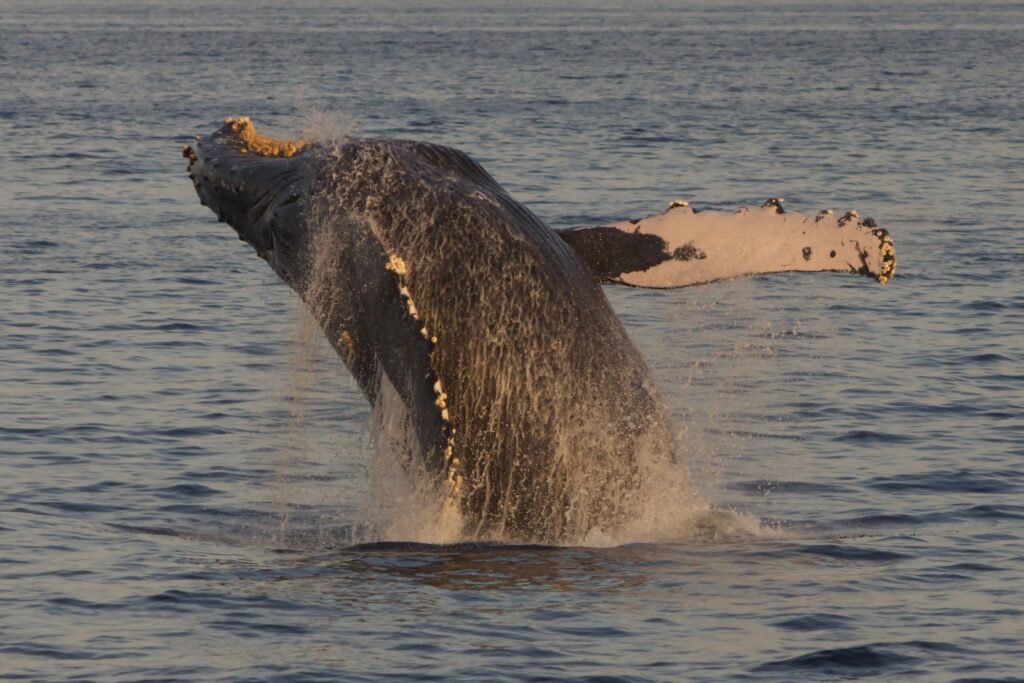
Humpback whales—koholā—return to Hawaiʻi’s warm waters each winter to mate, give birth, and nurse calves. You do not have to buy a boat tour to appreciate them, and no responsible operator can promise a close encounter.
The useful decisions are when you are traveling, whether shore viewing is enough, and what kind of boat experience fits your group.
Hawaiʻi whale watching at a glance
- Season: Generally November through May, with peak humpback abundance in January through March, according to the NOAA sanctuary. Individual sightings are never guaranteed.
- Free option: Watch from a legal shoreline viewpoint with binoculars. You do not need a boat ticket to look for whales.
- Boat option: Choose a suitable vessel and naturalist-led experience, not a promise of getting close. Federal rules prohibit approaching humpbacks within 100 yards in Hawaiian waters.
When is whale season in Hawaiʻi?
NOAA’s Hawaiian Islands Humpback Whale National Marine Sanctuary describes whales arriving beginning around November, with some remaining into May. Sightings typically peak in the middle of winter; NOAA materials often identify January through March or February–March as the highest-abundance period.
That is a biological season, not a guarantee. A November visitor may see whales; an early spring visitor may have an excellent day; any individual trip can still be quiet.
The 100-yard rule is not optional
Federal law in Hawaiʻi prohibits approaching a humpback whale within 100 yards by boat, kayak, paddleboard, drone, swimming, or other means. A responsible whale-watching trip creates a good experience through interpretation, positioning, and patience—not by closing that distance.
See our Hawaiʻi wildlife-distance guide for turtles, monk seals, dolphins, and whales in one reference.
Can you see whales from shore?
Yes. In season, humpbacks can be visible from elevated coastal viewpoints and shorelines around several islands. Shore viewing costs nothing, avoids seasickness, and lets you leave whenever your group is ready. Bring binoculars rather than trying to move closer on the water.
On Oʻahu, DLNR specifically notes seasonal whale viewing from the Makapuʻu Point Lighthouse Trail. Maui also has numerous coastal viewpoints; choose legal parking and stay away from cliff edges and wave-washed rock.
When a boat tour is worth considering
- You want a naturalist or crew member to interpret behavior.
- Everyone in your group is comfortable on a moving vessel.
- The boat size, shade, restroom, and boarding arrangement fit your needs.
- You value several hours specifically devoted to whale viewing.
- You understand sightings are wildlife-dependent, not staged.
How to compare whale-watching operators
Ask how the captain handles the 100-yard rule, what happens if a whale surfaces closer than expected, whether the company participates in whale research or reporting, the maximum passenger count, and whether the vessel offers shade and a restroom.
Read the cancellation and “no sightings” policy carefully. A free return trip may have little value if you leave the island the next morning.
Which island should you choose for whales?
Do not choose an entire island only because someone calls it “the best” for whales. Humpbacks use waters across the Hawaiian Islands. Maui has a large whale-watching industry and sanctuary waters around Maui Nui, but Oʻahu, Kauaʻi, and Hawaiʻi Island also offer seasonal viewing.
Choose the island for the whole trip, then choose the whale plan that fits it. Our island guides help with that larger decision.
Maui deserves its own planning decision
If you are already going to Maui in whale season, use our Maui whale-watching guide for harbor, timing, vessel, and recovery-context questions.
What to bring
- Binoculars for shore viewing.
- Sun protection and a secure hat.
- A warm or wind-resistant layer for an early boat trip.
- Water.
- Motion-sickness strategy discussed with an appropriate healthcare professional if needed.
- Camera with a zoom rather than any plan to close the viewing distance.
What whale behavior can you see from a distance?
Even from shore or beyond the legal boat distance, you may see blows, backs, flukes, pectoral fins, breaches, or surface activity. Binoculars make distant behavior easier to follow and reduce the temptation to treat proximity as the measure of a successful sighting.
Use the official sanctuary and NOAA guidance
The Hawaiian Islands Humpback Whale National Marine Sanctuary provides seasonal education and whale information, while NOAA Fisheries’ Hawaiʻi viewing guidance explains the 100-yard humpback approach requirement. Use those sources instead of a tour advertisement when a wildlife rule is unclear.
When not to book a boat
A boat tour is not automatically the superior experience. Choose shore viewing when motion sickness, boarding difficulty, a very young child, a tight itinerary, or the desire for a completely flexible stop outweighs the benefit of dedicated time on the water. A pair of binoculars from a legal overlook can produce a calmer and lower-cost whale day.
Sources and review
Reviewed October 24, 2026 using NOAA Fisheries and Hawaiian Islands Humpback Whale National Marine Sanctuary guidance. Whale presence varies within the November–May season; federal 100-yard humpback approach rules apply in Hawaiʻi.