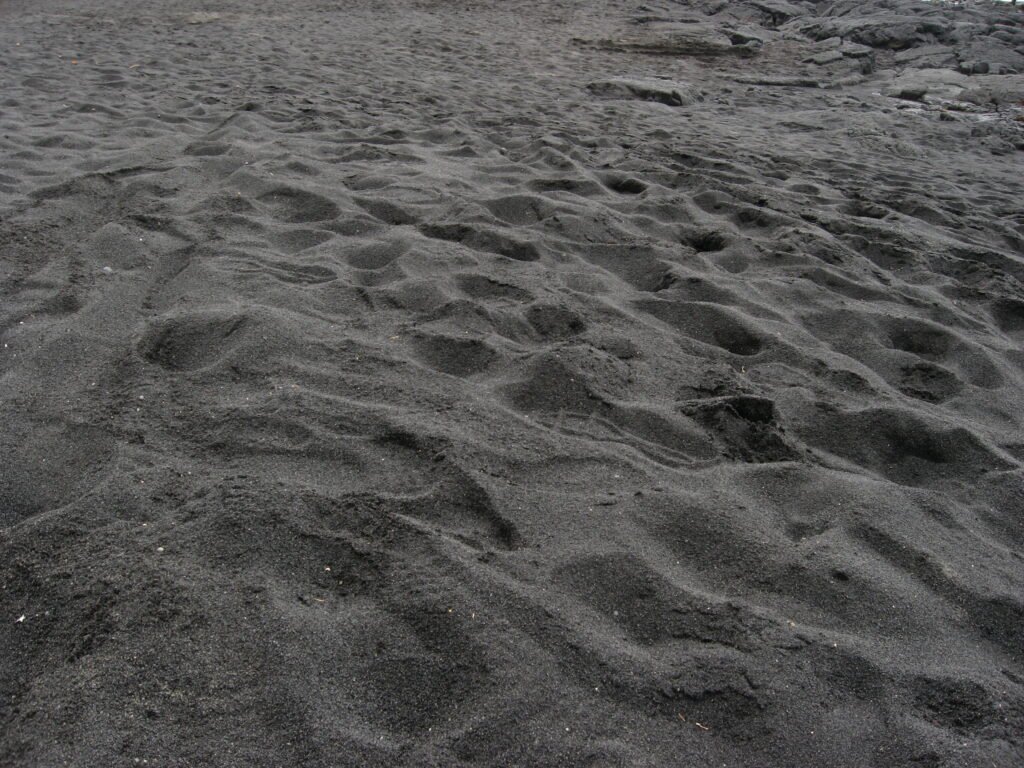
Punaluʻu is one of Hawaiʻi Island’s best-known black sand beaches, but the color of the sand is only part of the visit. Honu—Hawaiian green sea turtles—may rest on the shore, the ocean can be unsuitable for swimming, and the beach is a place to observe rather than collect.
Treat Punaluʻu as a scenic and wildlife-viewing stop first. If the ocean happens to be appropriate for your abilities that day, that is a separate decision.
Where Punaluʻu fits on Hawaiʻi Island
Punaluʻu sits on the southeastern Kaʻū coast between Pāhala and Nāʻālehu. It can fit naturally on a route between South Kona and the Volcano area, but do not use that as a reason to rush through the beach as a ten-minute photo stop.
If you are changing bases, our seven-day Hawaiʻi Island itinerary shows how to keep transfer days useful without turning them into a checklist.
The black sand stays here
GoHawaii’s current Punaluʻu visitor guidance explicitly asks visitors not to remove black sand. Leave sand, rocks, coral fragments, and other natural material where you find them. A small jar of sand is not a harmless souvenir when thousands of visitors make the same choice.
Photographs are the souvenir that travels best.
Give resting turtles space
Honu are often associated with Punaluʻu, but no individual visit comes with a turtle guarantee. If a turtle is resting on the sand, do not surround it or place people between the animal and the water.
NOAA’s Hawaiʻi guidance recommends staying at least 10 feet from sea turtles. More space is better when the animal is moving or a crowd has already formed. See our wildlife viewing guide for the full Hawaiʻi reference.
Swimming is not the main reason to come
GoHawaii notes that swimming at Punaluʻu is not ideal. Do not let a calm-looking photograph override current surf, current, wind, or on-site warnings. Hawaiʻi’s ocean conditions can change quickly.
If you want a swimming day, choose the beach after checking Hawaiʻi Ocean Safety and current local conditions rather than forcing Punaluʻu to fill that role.
Facilities make it useful as a road-trip stop
GoHawaii currently identifies picnic and restroom facilities at Punaluʻu. That can make the beach a practical place for a break on a longer drive, but pack out rubbish and keep food away from wildlife.
Park only where current signs allow
Use designated visitor parking and follow current signs. Do not create overflow spaces on vegetation, private property, or travel lanes. Conditions and parking management can change, so the markings you see on arrival should take priority over an old map screenshot.
A respectful one-hour visit
- Park legally and walk to the shore without carrying unnecessary gear.
- Look for turtles from a distance before choosing where to sit or walk.
- Enjoy the black sand and coconut-lined coast without removing material.
- Use the facilities if needed and pack out rubbish.
- Decide about water entry only from current conditions—not from the itinerary.
- Continue the drive before fatigue turns the road trip into a push.
Pair Punaluʻu with the right nearby plans
Punaluʻu can complement a South Kona-to-Volcano transfer. It should not be squeezed into the same day as a full Hawaiʻi Volcanoes National Park itinerary unless your route and daylight genuinely support both. Read our one-day park guide before combining them.
For lodging and transport decisions, use the Hawaiʻi Island base guide and rental-car guide.
Why the sand is black
Black sand forms as dark volcanic material is broken down by waves and weather. The beach is part of an active volcanic-island landscape, not a manufactured attraction. Leaving the grains in place preserves the experience for the next visitor and avoids turning a natural shoreline into a source of souvenirs.
Turtle etiquette when the beach is busy
If a resting honu attracts a crowd, do not use another visitor’s position as your distance guide. Move farther back, keep children with you, and leave a clear route between the animal and ocean. A zoom lens or phone crop is a better answer than stepping closer.
Use current visitor and ocean guidance
GoHawaii’s Punaluʻu page is the current visitor reference for facilities, turtle etiquette, sand removal, and the fact that swimming is not ideal. Pair it with Hawaiʻi Ocean Safety rather than using an old travel blog to decide whether to enter the water.
Sources and review
Reviewed October 24, 2026 using GoHawaii Punaluʻu Black Sand Beach guidance, NOAA Hawaiʻi wildlife-viewing recommendations, and Hawaiʻi Ocean Safety. Wildlife presence and ocean conditions are never guaranteed.
Featured photograph: black volcanic sand at Punaluʻu Beach, April 15, 2010. Ken Lund / Wikimedia Commons, CC BY-SA 2.0.