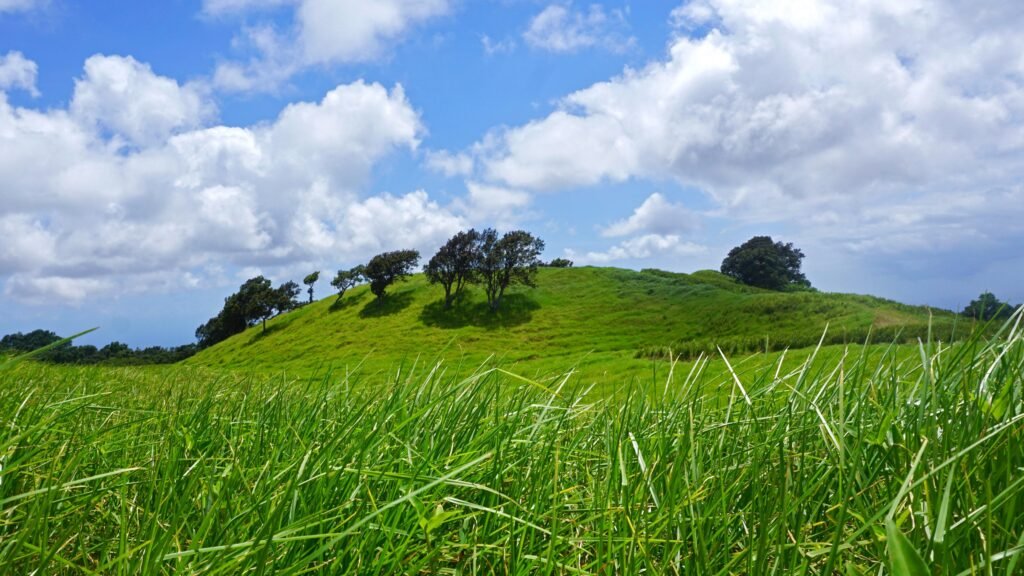
For a traveler curious about the Kahuku Unit but not ready for a long hike, Kamakapaʻa is one of the most approachable places to start. It crosses grassy meadows and rises to a small cinder cone with views of lower Kaʻū. The landscape looks very different from the black lava fields of Kīlauea, helping explain why Hawaiʻi Volcanoes National Park is much more than one crater.
The National Park Service lists the Kamakapaʻa route as approximately a half-mile loop, with about 40 feet of elevation change. It is described as an easy walk, but grass, uneven patches and exposure to changing weather still matter. See the official Kahuku trail list.
Start with the right park entrance
Kamakapaʻa is in the Kahuku Unit near mile marker 70.5 on Highway 11. It is not accessible directly from the main visitor-center parking areas near Kīlauea. The unit’s published hours are Thursday through Sunday, 8 a.m.–4 p.m.; always verify the schedule on the day you travel.
Plan to arrive early enough for the entire walk and for time to explore the views. Do not confuse the trail with a roadside stop where you can visit after the gate closes.
What the half-mile walk feels like
You move through open grassy country rather than dense rainforest. Near the small rise, there is a rewarding panoramic view without the sustained effort required by Kahuku’s longer routes. On a clear day, the broadness of the landscape is part of the experience. On a cloudy or rainy day, conditions can feel cooler and visibility less dramatic.
Use closed-toe shoes with traction. Do not judge the route by its distance alone if somebody in your party needs even pavement: grass and natural ground are not the same as a smooth accessible path.
What to do if somebody wants more hiking
Kahuku offers distinctly different experiences within a limited area. Puʻu o Lokuana is steeper and has a dramatic red cinder quarry. The Palm Trail is longer and better for a party that wants extended time outdoors. If your group has mixed energy levels, everyone can share Kamakapaʻa rather than splitting into unfamiliar routes.
Avoid combining trails merely to fill the day. A short hike with time to observe the plant life may be a better use of the visit than several hurried circuits.
Water, weather and wildlife manners
Kahuku has no potable water according to NPS. Bring your own drinking water even for a short walk; add sun protection and a light rain layer. Keep an eye on changes in clouds, wind and heat. If conditions are turning unpleasant, return along the designated route.
Stay on trail, leave rocks and plants undisturbed, and clean muddy shoes before visiting another sensitive area. The park includes native habitats affected by introduced pests and disease, so small visitor habits have a real conservation purpose.
Is it worth the drive on its own?
That depends on the route of the rest of your trip. Kamakapaʻa is an appealing short hike if you are already heading through Kaʻū and want a gentler introduction to Kahuku. It is less sensible as a stand-alone excursion from a distant resort if you have only a few hours and expect dramatic summit lava views.
For orientation, read our complete Kahuku Unit guide. It explains hours, access and how to pick among the trails.
Sources and review: November 2, 2026. NPS Kahuku Unit and Kamakapaʻa NPS place profile. Photo: National Park Service, public domain. Confirm current park alerts before arriving.