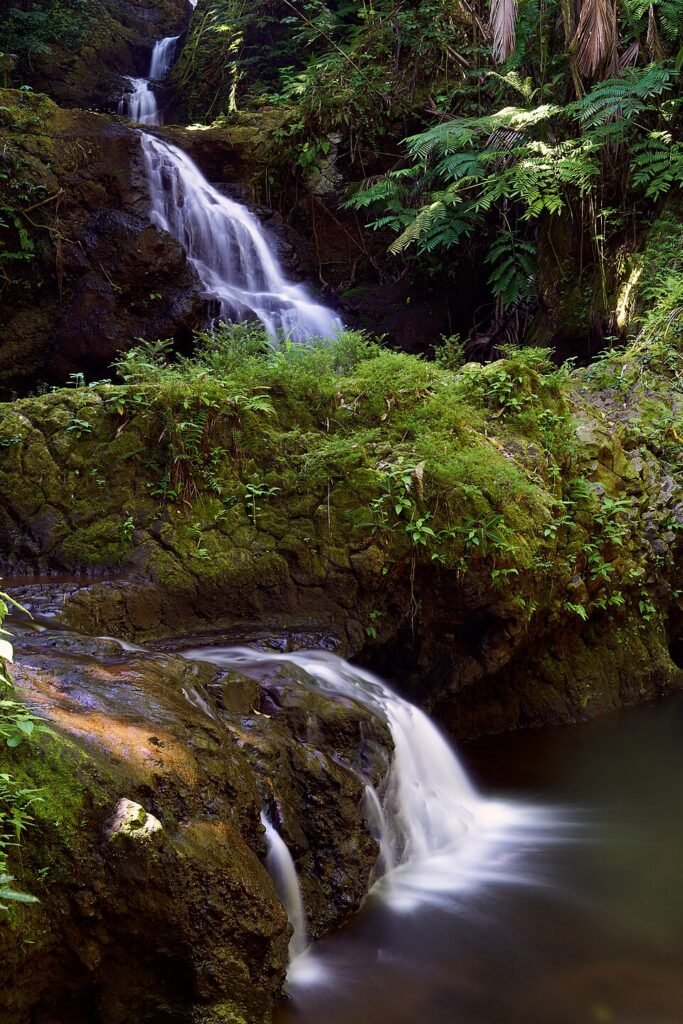
Hawaiʻi Tropical Bioreserve & Garden descends through a lush section of Onomea Valley north of Hilo, combining a large tropical plant collection, waterfalls, historical interpretation, and views toward Onomea Bay.
The garden is beautiful, but visitors should understand one practical issue before buying a ticket: the main boardwalk into the valley is steep. The organization explicitly limits mobility devices on that section because of the natural topography.
Current hours and admission
| Plan for | Current information |
|---|---|
| Daily hours | 10 a.m.–6 p.m. |
| Last entry | 5 p.m. |
| Adult self-guided admission | $35 |
| Children 6–12 | $25 |
| Children under 6 | Free |
| Suggested visit | 90 minutes–2 hours |
The garden currently closes on Thanksgiving, Christmas, and New Year’s Day while remaining open on other federal and state holidays. Check the official visit page for your actual date.
Guided tours are limited
As reviewed October 2026, guided tours are offered Wednesdays at 9:30 a.m. with groups limited to 10 people. Availability is calendar-based. Most visitors use the self-guided format.
The boardwalk is the key accessibility issue
The garden says the boardwalk entry changes roughly 100 feet in elevation over about 500 feet of length. Guests must be able to navigate it safely on their own.
Wheelchairs, walkers, scooters, and crutches are not permitted on the steep boardwalk. Walking sticks and canes are acceptable under current policy, and strollers must be unoccupied on that section.
If this affects your group, do not buy tickets based only on the word “garden.” Read the current accessibility page first. Our accessible Hawaiʻi guide explains the same call-ahead principle.
More than 2,500 tropical and subtropical plants
The organization says its founder and later garden team cultivated more than 2,500 tropical and subtropical plants, including native species and plants from around the world. Some species in the collection are now extinct in the wild, giving the garden a conservation role beyond ordinary landscaping.
Onomea Falls and cultural history are part of the route
The trail includes a three-tier waterfall and interpretation of earlier Native Hawaiian settlement and agricultural terraces in Onomea Valley. Read the signs rather than treating the path as an uninterrupted photography route.
Photography is welcome—with limits
Handheld personal photography is allowed, but visitors are asked not to block paths or monopolize areas. Drones and live broadcasts are prohibited, and commercial use requires separate authorization.
Use the scenic route, not the dirt-road GPS suggestion
The garden specifically recommends Old Māmalahoa Road’s scenic route and warns that GPS can misdirect drivers onto Old Onomea Road, a dirt route it does not recommend. Follow the garden’s current directions rather than blindly following the shortest navigation line.
From downtown Hilo, the garden estimates about seven miles and roughly 15 minutes by car. From Kona, it is a much larger cross-island commitment.
Pair it with an east-side day
The garden works naturally with Hilo, the Hāmākua Coast, or Rainbow Falls and Boiling Pots. Do not add it casually to a full Kona resort day just because the island looks compact on a map.
A practical visit plan
- Check current hours and admission.
- Review the steep-boardwalk accessibility policy.
- Allow 90 minutes to two hours.
- Bring water, rain protection, and insect protection as needed.
- Use the recommended scenic road directions.
- Move slowly through the plant and cultural interpretation rather than racing to the bay.
Sources and review
Reviewed October 26, 2026 using Hawaiʻi Tropical Bioreserve & Garden’s official rates, hours, accessibility, directions, photography, and garden-history pages. Admission, guided-tour calendars, and access policies can change.
Featured photograph: Hawaiʻi Tropical Botanical Garden, 2021. Pedro Szekely / Wikimedia Commons, CC BY-SA 2.0. Cropped for display; adaptations retain the same license.