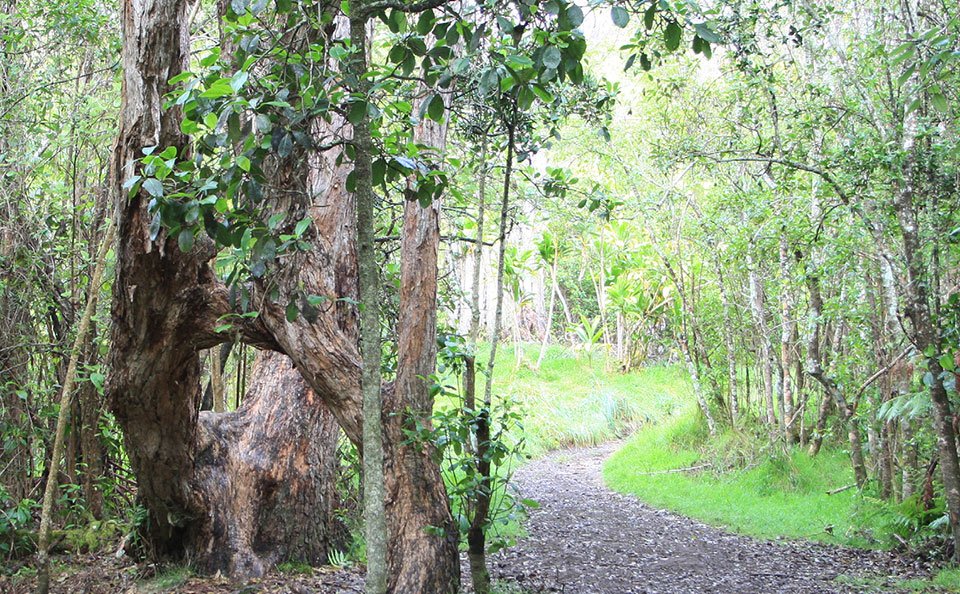
TRAIL CLOSED — verified November 3, 2026: The National Park Service currently lists Kīpukapuaulu Trail as closed because of hazardous trees and hanging limbs after recent storms. Do not enter this trail until NPS announces reopening. Check the official NPS Alerts & Conditions page for current status. The trail description below is for a future visit, not a walk currently available.
Not every memorable stop in Hawaiʻi Volcanoes National Park has to involve a crater or a lava field. Kīpukapuaulu—often called Bird Park—is a quieter walk in a pocket of older forest surrounded by more recent lava. If NPS reopens the loop, the contrast may make this an excellent choice for people who want to notice living parts of the volcanic landscape rather than rush through another viewpoint.
The National Park Service describes a 1.2-mile loop through the forest, with the possibility of spotting native birds such as ʻapapane, ʻōmaʻo and ʻelepaio. Sightings are never guaranteed, and the walk is worthwhile even if you hear more than you see. See the NPS birdwatching information.
What is a kīpuka and why does it matter?
A kīpuka is an island of older vegetation surrounded by newer lava or altered terrain. At Kīpukapuaulu, the older forest gives travelers a window into the plants and animals that can persist amid a landscape repeatedly transformed by eruptions. This context makes the walk different from a typical tropical garden: the plants are not arranged for photographs, and a healthy-looking trail does not mean the habitat is free from threats.
The best pace is a slow one. Stop at intervals to listen for birds, look for movement high in the trees and notice how light changes beneath the canopy. A short list of species to watch for is useful, but try not to turn the hike into a competition to find every bird.
Walking conditions and who it suits
NPS calls the path a narrow dirt trail with modest rises and falls. It is not a paved or fully accessible promenade. Rain can make roots, leaves and mud slippery. Closed-toe footwear helps; trekking poles may suit some visitors, though you should keep tips on the trail and not damage vegetation.
A patient group with children who enjoy quiet observation may get a lot out of the loop. Someone needing an even, firm surface may prefer the Devastation Trail instead, once that alternative’s current access and slope are checked.
How to watch birds without disturbing them
Watch from the path, use binoculars rather than approaching wildlife, and keep your voices low around other people who are listening for calls. NPS lists dogs, horses and bicycles as prohibited on this trail. Do not play bird calls loudly from your phone to lure an animal into view or step into understory vegetation for a better camera angle.
The most productive approach is often to wait: scan different canopy heights, then look for a flash of red from an ʻapapane or movement along a branch. If you see no birds, take the opportunity to study the forest itself.
Avoid spreading forest pests or disease
Cleaning footwear between hikes is particularly important in Hawaiʻi, where introduced species and pathogens affect native ecosystems. Brush mud and plant material off soles and equipment before entering another forest trail. Our boot-cleaning and Rapid ʻŌhiʻa Death guide explains practical biosecurity steps and why moving soil between sites is a problem.
Leave seeds, leaves, flowers, branches, rocks and soil where they are. Staying on designated paths helps protect fragile roots and habitats, even if a shortcut looks harmless.
Make a sensible half-day plan
After a confirmed reopening, Kīpukapuaulu can be a good choice when you want one unhurried forest walk rather than several strenuous hikes. Pair it with a visit to an officially open Kīlauea overlook, but allow for the drive between trailheads and for changes in weather. Only after NPS reopens the trail, if your schedule is tight, choose this loop instead of, not in addition to, a long crater hike.
For an overview of travel times and other park options, see our one-day Hawaiʻi Volcanoes plan and hiking-by-ability guide.
Sources and review: Reviewed November 2, 2026 from the NPS Kīpukapuaulu birdwatching guide and Hawaiʻi Volcanoes day-hike list. Check park conditions before departure. Featured forest photograph: National Park Service, public domain.