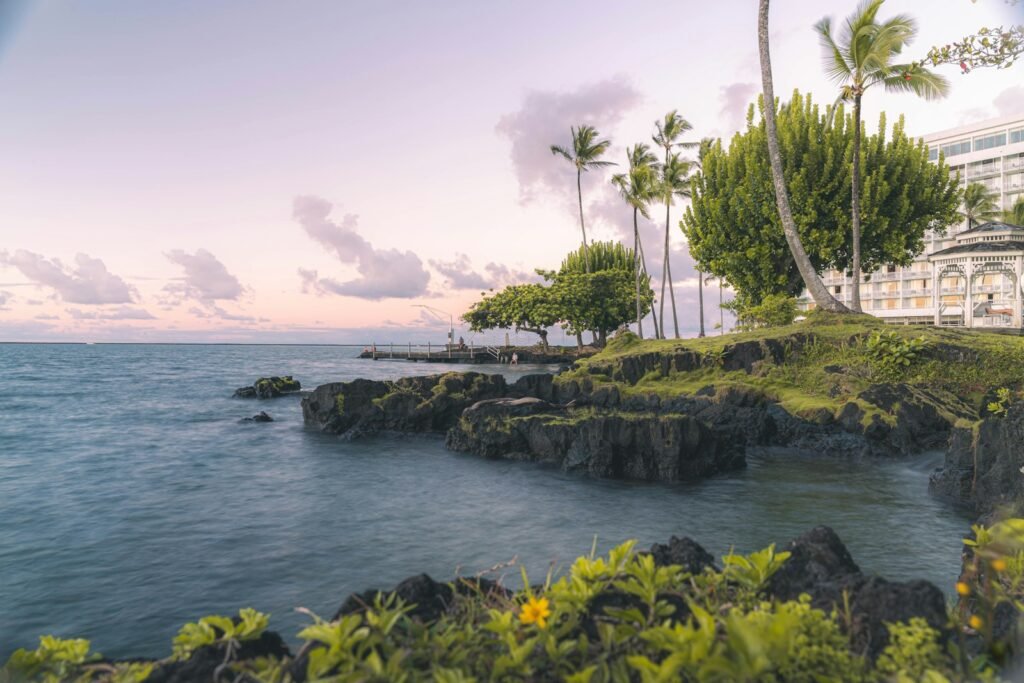
Laʻaloa White Sands Beach is better known by many visitors as Magic Sands or Disappearing Sands. The nickname describes a real feature of the shoreline: strong winter surf can move much of the sand offshore, exposing lava rock, and calmer conditions can return sand later.
That changeable character is exactly why you should arrive without assuming the beach will look—or swim—the way it did in someone else’s photograph.
Laʻaloa at a glance
| Feature | Planning implication |
|---|---|
| Location | Kona coast, convenient from Kailua-Kona |
| Common activities | Swimming, bodyboarding, and bodysurfing when conditions permit |
| Facilities | Official visitor information lists restrooms, showers, and lifeguards |
| Parking | Limited enough that a backup plan is useful |
| Seasonal change | Strong winter surf can remove the visible sand and expose rock |
The “disappearing” sand is not a gimmick
Wave energy can move sand offshore during periods of stronger surf. That means the amount of sandy beach available can vary considerably.
Do not climb onto wet exposed lava just to recreate a beach photo from a calmer season. The shoreline you find is the shoreline you should plan around.
Shorebreak can make a small beach surprisingly serious
Bodyboarding and bodysurfing are popular at Laʻaloa, but shorebreak can be forceful. If waves are breaking hard in shallow water, stay conservative.
Use the lifeguard tower and posted signs. Our ocean-safety guide explains why shorebreak injuries happen close to land, not only in deep water.
Parking should not dictate risky behavior
The beach is small and popular. If the legal parking area is full, do not block residential access, stop in a travel lane, or create an improvised shoulder space.
Kona has other shoreline options. A flexible itinerary is better than treating one parking lot as a make-or-break event.
This is an easy beach to combine with Kona
Laʻaloa works naturally as part of a Kona-based day. That makes it very different logistically from Hāpuna, Hawaiʻi Volcanoes National Park, or Hilo-area waterfalls.
If you are still choosing a base, start with our Kona, Kohala, Hilo, or Volcano comparison. The Hawaiʻi Island budget guide helps account for the vehicle time and fuel created by long cross-island plans.
Do not confuse a lifeguarded beach with guaranteed safe water
Lifeguards provide observation, rescue, and current local knowledge. They cannot make every swell appropriate for every swimmer.
Ask before entering if you are uncertain. If you are traveling with children or inexperienced ocean swimmers, a dry beach stop or another protected activity may be the better decision that day.
Who may enjoy Laʻaloa most
The beach can appeal to confident swimmers and bodyboarders who understand shorebreak and want a convenient Kona stop. It can also be enjoyable from shore when surf is too strong for your group.
Travelers expecting a broad, permanently sandy, calm swimming beach should keep another option in mind because the visible sand and surf character can change.
Bodyboarding deserves the same caution as swimming
A board gives speed but does not remove the impact risk of a breaking wave in shallow water. Watch several sets before entering, stay out of crowded takeoff zones, and ask lifeguards where conditions are most appropriate.
Children should not be sent into strong shorebreak because they have a flotation device or board. Those items do not prevent a wave from driving someone into the bottom.
Keep a second Kona shoreline option
If sand has shifted, parking is full, or lifeguards advise staying out, continue with another Kona plan rather than waiting for the beach to become the version you expected.
That flexibility is one advantage of staying on the west side: a short beach stop can sit alongside food, coffee-country, cultural, or sunset plans without controlling the entire day.
Sources and review
Reviewed October 30, 2026 using the Hawaiʻi Tourism Authority’s official Laʻaloa White Sands Beach Park information. Sand, surf, parking, and swimming conditions change; use same-day lifeguard guidance.
Featured photograph: Hawaiʻi Island lava-coast sunset context. Photo by Nitin Karolla / Unsplash; it is not a current Laʻaloa conditions photograph.