Hawaiʻi Island budgeting is mostly a geography problem. The island is large enough that where you sleep changes your driving, fuel, airport choice, and how much of each day remains for the place you came to see.
Instead of starting with an average “cost per day,” compare two complete versions of the trip: one base versus a split stay. Then add the activities you actually want.
The six budget lines that matter
- Accommodation and mandatory property charges.
- Rental car or other transport.
- Fuel, charging, and parking.
- Park fees and paid activities.
- Food and groceries.
- Flexible money, plus a separate line for refundable deposits/holds.
1. Compare one base with a split stay
Use our Hawaiʻi Island base guide to compare Kailua-Kona, the Kohala Coast, Hilo, and Volcano. A west-side stay can work well for Kona and Kohala days, while an east-side stay reduces driving to Hilo and Hawaiʻi Volcanoes National Park.
A split stay adds another checkout, possible cleaning or resort charges, and transfer logistics. It can still be cheaper in practical terms if it removes multiple long round trips. Put both versions into a spreadsheet before choosing.
2. Price the car with the accommodation
For a trip covering both sides, a rental car is often the next major line after lodging. Use our Hawaiʻi Island rental car guide to compare a full rental, selected days, or a route-based trip using Hele-On and organized tours.
Record the complete rental quote, parking at every accommodation, expected fuel or charging, and any one-way or different-location return charge. If your flights use different airports, check whether the vehicle can be returned where you need it.
3. Let your airports affect the budget
Flights through Kona (KOA) and Hilo (ITO) can create different ground-transport costs. A fare that looks cheaper may add a long final drive, an extra night near the airport, or a one-way rental fee.
For a split west/east itinerary, compare these versions:
- Round trip through Kona with the final night on the west side.
- Round trip through Hilo with the final night on the east side.
- Arrive at one airport and depart from the other, if flight and rental pricing works.
Our seven-day Hawaiʻi Island itinerary explains how the final-night airport decision affects the route.
4. Add park fees before adding tours
Hawaiʻi Volcanoes National Park can fill a day without an expensive guided activity. Check the current National Park Service entrance fee for your vehicle or pass and decide which park areas you will realistically use. Our one-day park guide helps you build the route.
Then choose paid experiences for what they add: instruction, access, transport, interpretation, or equipment. A coffee-farm visit, manta experience, guided kayak, or stargazing tour should compete for the same activity budget rather than quietly stacking on top of it.
5. Maunakea can change the vehicle budget
A Maunakea summit plan may require a vehicle category and rental contract that differs from an ordinary island rental. Two-wheel-drive vehicles are not permitted above the Visitor Information Station, and the summit road requires appropriate 4WD/AWD capability under current management rules.
If your goal is stargazing rather than the summit itself, the Visitor Information Station may fit without the same vehicle requirement. Decide that before paying extra for a vehicle you may not need. See our Maunakea guide.
6. Match food spending to the route
Long island days often mean lunch away from the room. If you stay in a vacation rental with a kitchen, use it for the meals that fit your itinerary—often breakfast and a few dinners—rather than assuming every meal can be prepared there.
Plan meals by location: breakfast near the base, lunch on the day’s route, dinner near the place you end. Then price that version. This produces a more useful number than a generic food allowance.
A fictional seven-day example
These figures demonstrate the calculation only and are not current quotes.
| Category | Fictional amount | Notes |
|---|---|---|
| Six nights lodging | $1,800 | Three west + three east, complete quotes |
| Rental + fuel + parking | $850 | One vehicle for the trip |
| Park and activities | $500 | One major paid experience plus smaller fees |
| Food | $900 | Groceries plus meals out |
| Flexible money | $250 | Unplanned changes |
| Total | $4,300 | Illustration only |
Where to save without shrinking the experience
- Choose bases that reduce repeated cross-island driving.
- Use park and town days between expensive tours.
- Decide whether the Maunakea summit matters before upgrading the rental vehicle.
- Use a kitchen for meals that naturally fit the itinerary.
- Compare open-jaw flights and one-way vehicle costs instead of assuming one airport is cheaper.
Put your real figures into the free trip-budget planner, keeping refundable holds separate from final expenses.
Use live sources for the costs that change the route
Check Hawaiʻi Volcanoes National Park fees, Hele-On routes, and the Center for Maunakea Stewardship visitor information before finalizing the budget. Those sources can affect whether you need a vehicle, which airport/base combination is practical, and whether a summit-specific vehicle upgrade belongs in the plan.
Compare the route before the room rate
A $100 lodging difference can disappear quickly if one version creates extra cross-island driving, a one-way rental charge, or an additional airport transfer. Compare the complete west/east route first, then choose among properties that fit it.
Sources and review
Budget framework reviewed October 23, 2026. Transport and Maunakea operational guidance were checked against Hawaiʻi County Mass Transit Agency and Center for Maunakea Stewardship information. Check all prices for your dates.
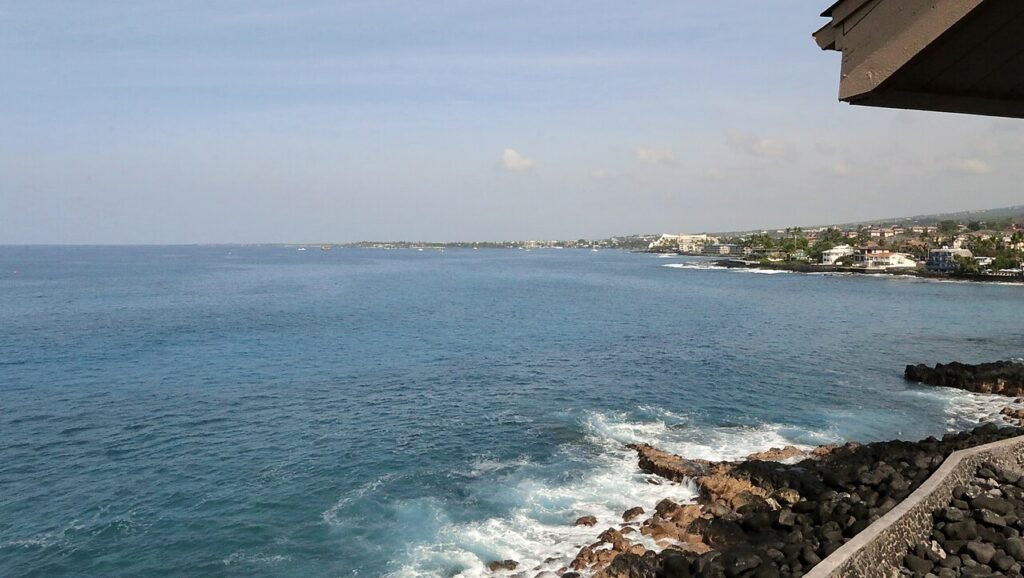
Featured photograph: Kona Bay and the Kailua-Kona shoreline, photographed in 2014. Robert Linsdell / Wikimedia Commons, CC BY 2.0.