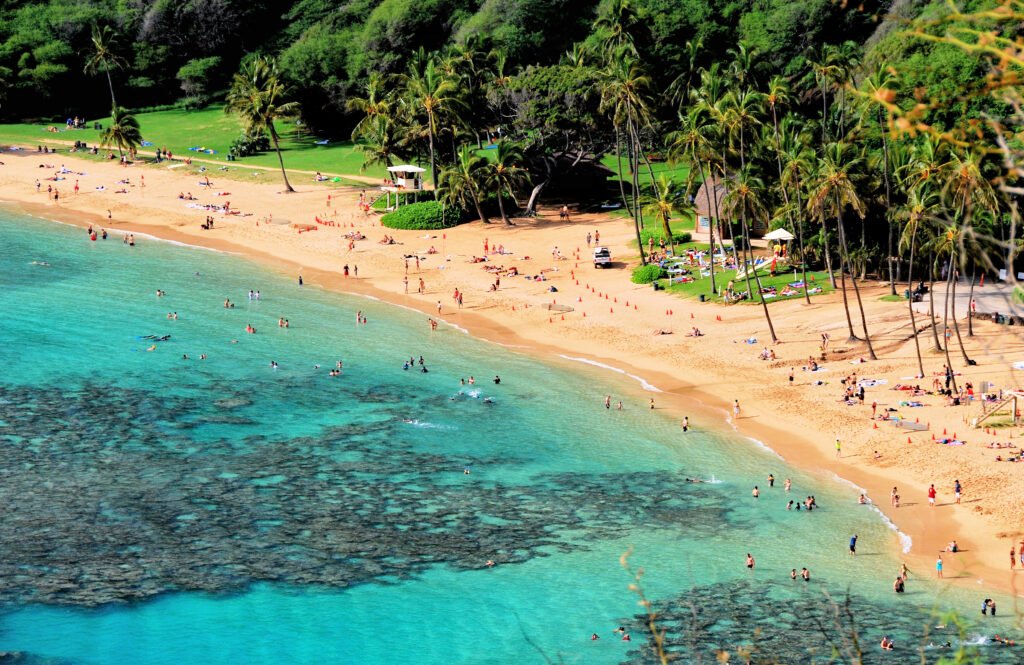
Hanauma Bay Nature Preserve on Oʻahu rewards a little preparation. Arrange your entry, leave time for the education program, and decide whether to snorkel after checking the conditions. The aim is a visit that works for your group while giving the bay’s wildlife and reef room to thrive.
Researched and checked against official sources on October 18, 2026. Recheck the linked park information before booking or traveling.
Hanauma Bay at a glance
The City’s visitor information lists:
| Plan for | Current details |
|---|---|
| Open days | Wednesday–Sunday; closed Monday, Tuesday, December 25 and January 1. |
| Entry | 6:45 a.m.–1:30 p.m. |
| Closing | Beach cleared at 3:30 p.m.; preserve closes at 4 p.m. |
| Admission | Nonresidents aged 13+: $25. Children 12 and under: free. Online service fee: 2.35%. |
| Parking | $3 for nonresidents; $1 for residents. Cash only. |
How to reserve your visit
Official admission-only reservations open at 7 a.m. Hawaiʻi Standard Time, two days ahead: Monday for Wednesday, for example. Select an educational-video time, pay and save the confirmation. Each booking allows up to five adults and five children. Bring matching photo ID. Bookings are nontransferable and nonrefundable except for an unexpected City closure. Everyone watches the required video each visit. See the City’s booking instructions.
Check what 7 a.m. HST means wherever you will be booking. Set your reminder for the release day, and agree on the group’s preferred time before opening the reservation system. Include children when planning the party size. Save the confirmation somewhere you can find it without searching through email at the entrance.
Reservations do not reserve parking. Walk-in tickets are first come, first served from 6:45 a.m. on open days; the entire party must be present. Hawaiʻi residents with valid Hawaiʻi ID enter free during public hours without reservations. Check the official eligibility and entry rules.
The City also links to Roberts Hawaiʻi admission with transportation, which offers earlier booking. Compare the total package cost, pickup location, visit length and cancellation terms with arranging admission and transport separately. Check the provider’s current calendar for availability.
Keep a backup outing you would enjoy if entry is unavailable. That makes the reservation outcome less likely to derail the day, particularly when traveling with children or a group with different interests.
Pack for a manageable beach visit
Use a small checklist: confirmation and ID, parking cash if driving, drinking water, a towel, sun protection, any snorkeling equipment you plan to bring, and a bag for wet items and rubbish. Keep valuables to a minimum and agree on a meeting point before anyone enters the water. Before choosing equipment or an outing, use our first-time snorkeling guide to assess the instruction, swimming skills, and assistance your group needs.
Leave space in the day for arrival, the education program and getting between the entrance and beach. Avoid booking another activity so tightly afterward that someone feels rushed to get in the water or stay longer than they are comfortable.
Check conditions before snorkeling
A reservation secures an entry time; it cannot promise suitable ocean conditions. Hawaiʻi’s Department of Health advises that snorkelers should be experienced ocean swimmers, check conditions with lifeguards, use properly fitting equipment and stay with a buddy. High surf, strong currents, wind and shorebreak can make entry unsafe. Read its snorkeling safety guidance before deciding whether this activity suits your group.
At the beach, ask a lifeguard where conditions are suitable that day and follow posted warnings. Stay out if you are uncertain. Adults should actively supervise children near the water; lifeguards watch the whole beach. The City also warns against the wet, wave-washed rocky ledges. Its Hanauma Bay safety page explains these hazards.
Protect the reef while you are in the water
Hanauma Bay is a Marine Life Conservation District. DLNR’s rules prohibit taking or injuring marine life, feeding or attracting it with food, and taking or altering sand, coral or other geological features. Leave coral, rocks and sand where they are, and do not collect marine souvenirs.
Keep your body and fins clear of the reef. Do not stand on coral or touch wildlife; these are also part of the state’s snorkeling guidance. Adjust equipment before setting off so you are less tempted to grab or stand on something when a mask leaks. If you cannot stay clear of the reef comfortably, end the swim.
Give turtles and monk seals space
NOAA’s Hawaiʻi viewing guidance recommends these distances on land and in the water:
- Sea turtles: at least 10 feet (3 metres).
- Hawaiian monk seals: at least 50 feet (15 metres).
- A mother monk seal with a pup: at least 150 feet (about 45 metres).
Follow any barriers or signs that keep you farther away. Never touch, chase or feed an animal, and let resting wildlife remain undisturbed. Use your camera’s zoom instead of moving closer. Report sick, injured, stranded or dead marine wildlife to NOAA at 888-256-9840; keep your distance while seeking help.
Use thoughtful sun protection
Pack a UPF sun shirt and use shade as part of your sun protection. NOAA’s sunscreen guidance identifies UV-protective clothing and mineral sunscreen as options to consider while explaining that environmental effects remain an active research area. Treat “reef-safe” wording as a prompt to check ingredients and evidence, rather than a guarantee of no environmental impact. Follow your sunscreen’s application instructions, and remember that avoiding contact with coral matters too.
Practical questions
Can I rent snorkeling equipment?
On-site rentals run 7 a.m.–3 p.m. and accept credit or debit cards. Check the City’s amenities information for the rental link and current details.
What accessibility help is available?
The City describes a wheelchair-accessible tram between the education center and beach, plus free beach wheelchairs available at the beach information kiosk from 8 a.m.–3 p.m. The education video includes closed captions. Check the accessibility information and call 808-768-6861 to discuss your needs before visiting.
Planning the rest of your trip? Start with our Hawaiʻi trip-planning guide and build an itinerary with room for changing conditions.
Before you go
- Save the reservation confirmation and matching ID requirements.
- Check the City page again for current hours, fees, parking, and closures.
- Decide whether everyone has the ocean-swimming experience to snorkel; our first-time snorkeling guide helps with that decision.
- Keep a dry-land backup plan in case conditions make snorkeling a poor choice.
Sources and review
Reviewed October 23, 2026. Reservation, operating, accessibility, and amenity details are linked to the City and County of Honolulu beside the relevant guidance; reef rules link to Hawaiʻi DLNR, and wildlife distances link to NOAA. Recheck those primary sources before travel because entry procedures and ocean conditions can change.
Featured photograph: Hanauma Bay, photographed December 17, 2008. Ossewa / Wikimedia Commons, CC BY-SA 4.0. Resized and cropped for display; adaptations retain the same license.

Use Hanauma Bay as part of a broader snorkeling plan
If Hanauma Bay sells out or conditions make snorkeling unsuitable, do not treat the day as lost. Use our statewide snorkeling comparison to decide whether another lifeguarded shore, a guided boat, or a dry-land activity better fits the trip.
For equipment decisions, compare renting versus bringing snorkeling gear. For the rest of Oʻahu, the Oʻahu hub now links the newer southeast, museum, windward and North Shore guides so Hanauma Bay does not have to carry the whole day.