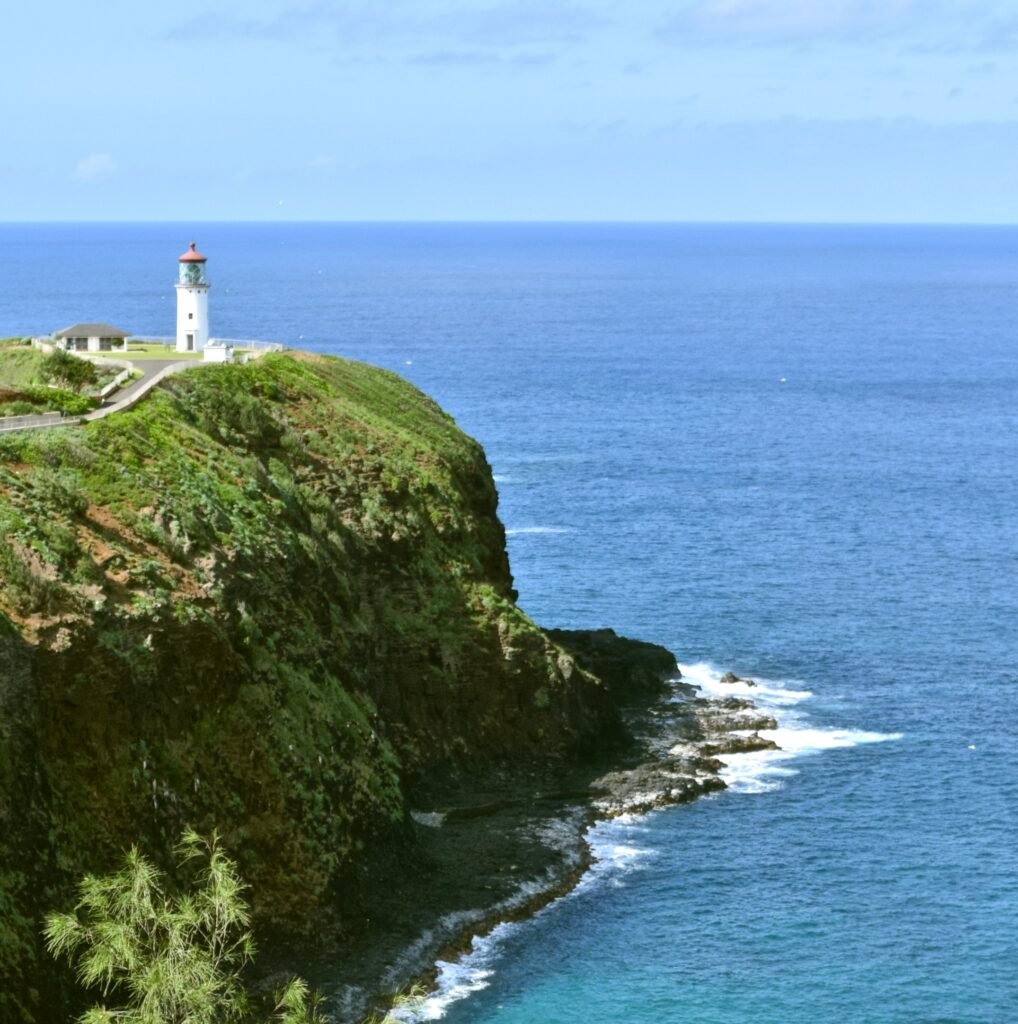
Kīlauea Point National Wildlife Refuge is a compact North Shore Kauaʻi visit with a lot packed into one headland: nesting seabirds, ocean views, the historic Daniel K. Inouye Kīlauea Point Lighthouse, and seasonal chances to spot whales offshore.
The detail most likely to derail the visit is simple: adults need a reservation. Do not drive to the end of Kīlauea Road expecting a normal walk-in lighthouse stop.
Current reservation essentials
| Plan for | Current rule |
|---|---|
| Open days | Wednesday–Saturday |
| Hours | 10 a.m.–4 p.m. |
| Last entry | 3:30 p.m. |
| Who reserves | All adults age 16+ |
| Children 15 and under | Free; no reservation needed |
| Adult 1-day entry | $11 including reservation fee |
| Reservation window | Tickets available up to about two months ahead |
| Ticket duration | Valid for 45 minutes from the reservation start |
If 45 minutes is not enough, book accordingly
Recreation.gov says entry tickets are valid for 45 minutes from the start of the reservation. If you want longer for birding, photography, or a slower visit, the current instructions say to make multiple reservations.
Do not arrive at 3:45 p.m. with an earlier ticket and expect extra time; the gate closes for last entry at 3:30 p.m.
Passholders still need the correct reservation
America the Beautiful passholders use the designated passholder entry option when reserving. The passholder must be present with photo ID and the physical pass. Each accepted pass can cover up to four adults under the current refuge instructions.
Hawaiʻi residents and certain other pass categories have their own “buy/use pass upon arrival” reservation choices. Follow the current dropdown instructions rather than purchasing an unnecessary ticket.
This is a wildlife refuge first
Kīlauea Point supports major seabird colonies, including a large red-footed booby colony. The refuge’s purpose is habitat protection, so the visitor experience is intentionally more controlled than an ordinary scenic overlook.
Current rules require at least a 10-foot distance from wildlife. Do not feed birds, leave food scraps, cross barriers, or move closer to a resting animal for a photograph. Our Hawaiʻi wildlife guide covers broader marine-animal distances.
You cannot walk down the access road
Recreation.gov currently prohibits walking into the refuge because of nesting/resting birds and two-way traffic on the narrow driveway. Follow the reservation’s arrival instructions and use the designated visitor access rather than parking elsewhere and walking in.
The lighthouse is visible but not open for tours
The historic lighthouse is one of the site’s focal points, but current Recreation.gov information states that the lighthouse is closed for tours and interior entry. FWS also notes ongoing storm-damage repair work. Plan to view and photograph it from the refuge grounds rather than expecting to climb inside.
Food, pets, drones, and facilities
- No food or drink except water.
- No smoking or vaping.
- No pets except identified service dogs.
- No drones.
- Restrooms are available on site.
- Bring binoculars if birding or seasonal whale viewing matters to you.
Accessibility is relatively straightforward but still worth checking
Recreation.gov describes a roughly five-minute paved walk with a slight uphill grade from parking to the point. A golf cart is available by request at the fee booth for visitors needing assistance. Staff and volunteers do not load or unload mobility devices.
If the exact route, seating, restroom setup, or assistance matters to your visit, contact the refuge before booking rather than relying only on the word “paved.”
What can you see?
Bird activity changes with season, but Kīlauea Point is known for seabirds including red-footed boobies, tropicbirds, shearwaters, and nēnē. From the high point you may also spot marine wildlife offshore. Humpback whales are seasonal visitors to Hawaiian waters, generally beginning around November into spring.
Bring binoculars and accept wildlife on its own terms. The refuge is worthwhile even when your personal species checklist does not appear.
Fit it into a North Shore day
Kīlauea Point can pair with Kīlauea town or another North Shore stop, but keep enough buffer around the reservation. It is a poor choice to squeeze between a fixed Hāʻena shuttle and a distant South Shore booking.
Use the seven-day Kauaʻi itinerary, where-to-stay guide, and Hawaiʻi reservation timeline to place it.
A simple visit plan
- Reserve every adult age 16+ on Recreation.gov.
- Choose multiple consecutive reservations if you want more than 45 minutes.
- Arrive with water but leave food in the vehicle/accommodation as appropriate.
- Bring binoculars and follow the 10-foot wildlife rule.
- Use the paved route to the point and view the lighthouse from outside.
- Leave before the 4 p.m. closure and continue the rest of the North Shore day without rushing.
Sources and review
Reviewed October 24, 2026 using U.S. Fish & Wildlife Service and Recreation.gov. Reservations are required for adults 16+, current refuge hours are Wednesday–Saturday 10 a.m.–4 p.m., and the gate closes for last entry at 3:30 p.m. Recheck the booking page for closures, repairs, and fee changes.
Featured photograph: Kīlauea Point Lighthouse, March 12, 2017. Deb Nystrom / Wikimedia Commons, CC BY 2.0.