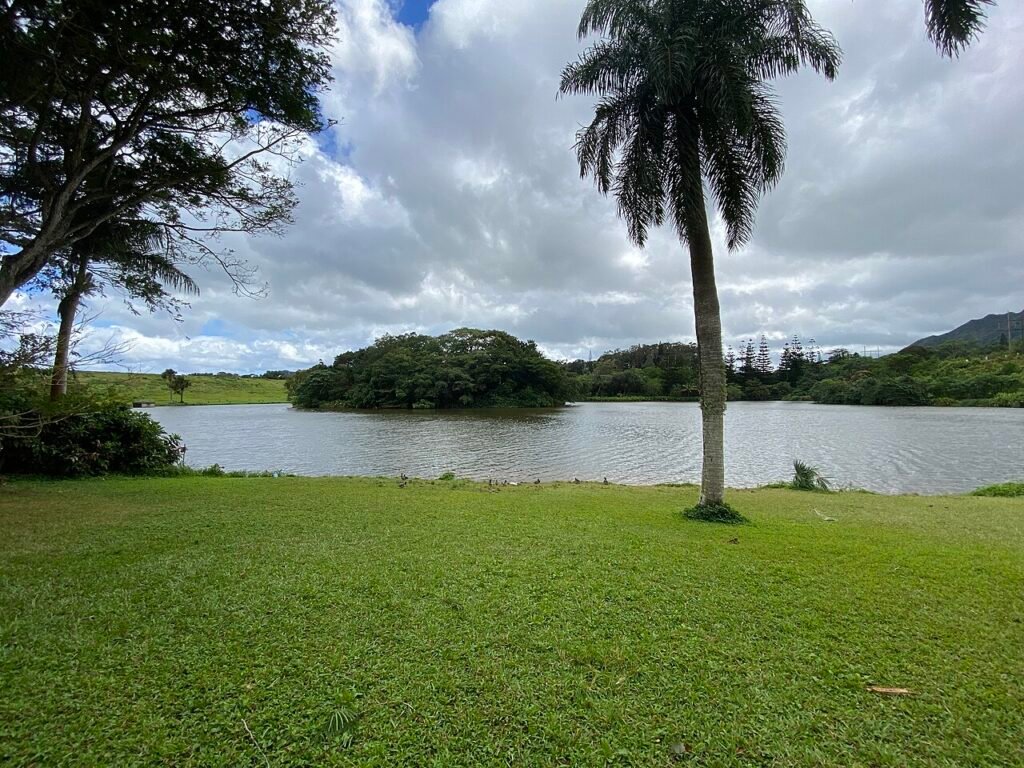
Hoʻomaluhia Botanical Garden is one of Oʻahu’s most dramatic green spaces, with broad lawns, tropical plant collections, a reservoir, and the steep Koʻolau Range rising behind the garden. The scenery attracts photographers, but the garden is first a public botanical and conservation space.
The best visit is unhurried: drive slowly, stop only where permitted, walk a garden section, and spend time looking at the plants instead of chasing one famous road photograph.
Current basics
Hoʻomaluhia is part of the City and County of Honolulu Botanical Gardens system at 45-680 Luluku Road in Kāneʻohe. Current garden information lists free admission and normal public hours of about 9 a.m.–4 p.m., with holiday closures and special program schedules possible.
Check the Honolulu Botanical Gardens page before driving over, especially after severe weather or when a special event is scheduled.
This is a large garden
Hoʻomaluhia covers roughly 400 acres, so it is not comparable to a compact city conservatory. The garden was developed in a flood-control setting and now contains plant collections from tropical regions around the world, with increasing emphasis on Polynesian and Hawaiian plants.
You do not need to walk the entire property. Choose one or two sections, take a short walk, and leave room to stop at legal pullouts or parking areas.
Do not stop in the roadway for photographs
The entrance road and Koʻolau backdrop have become social-media photo locations. Standing in an active roadway, blocking traffic, or directing a long portrait session in the lane interferes with the garden and other visitors.
Use designated parking areas and photograph from legal pedestrian spaces. Commercial, wedding, or organized photography may require permits through Honolulu Parks and Recreation.
Rain is part of the windward setting
Kāneʻohe is on Oʻahu’s greener windward side, so passing rain is common. A light shower can suit a garden visit, but heavy rain, thunder, strong wind, flooding, or official closure notices should change the plan.
Bring a light rain layer and shoes comfortable on wet grass or paths. Use our rainy-day Hawaiʻi guide for alternative indoor ideas when conditions are more than a normal shower.
Families can use it as a low-pressure outdoor day
Compared with a steep hike, a botanical garden lets families choose their own distance and turn around easily. Bring water, snacks where permitted, sun/rain protection, and a change of clothes for young children if the grass is wet.
Fishing, camping, and programs are separate activities
The wider Honolulu Botanical Gardens system supports programs such as catch-and-release fishing, camping, classes, and events at applicable sites. These activities can have separate registration or permit requirements. Do not assume that free garden admission makes every activity drop-in.
Combine it with a windward Oʻahu day
Hoʻomaluhia pairs naturally with Kāneʻohe or Kailua, but avoid crisscrossing the island repeatedly. If Lanikai or Kailua Beach is also on your list, read our Kailua and Lanikai comparison before planning the parking.
What not to do
- Do not block the entrance road for photos.
- Do not pick flowers, fruit, or plant material.
- Do not enter closed areas.
- Do not leave food or trash on lawns.
- Do not fly a drone without confirming all applicable rules and permits.
- Do not treat private ceremonies or educational programs as public attractions.
A simple visit plan
- Check current city garden notices.
- Arrive during normal public hours.
- Drive slowly and park only in designated areas.
- Choose one or two garden sections instead of trying to cover 400 acres.
- Photograph without blocking roads or other visitors.
- Leave plants and natural material where they are.
Drive less and walk one section well
The garden’s size can tempt visitors to stay in the car and stop at every pullout. Instead, choose one plant collection or walking area and experience it on foot. You will notice more than you do through a windshield, and the visit creates less traffic inside the garden.
Keep outside plant material out
Botanical collections are vulnerable to pests and disease. Arrive with clean footwear and do not bring cuttings, soil, seeds, or plant material from another trail or garden. Leave the collection exactly where it grows.
Sources and review
Reviewed October 26, 2026 using City and County of Honolulu Botanical Gardens information and Friends of Honolulu Botanical Gardens visitor details. Hours, program access, and temporary closures can change after storms or events.
Featured photograph: Loko Waimaluhia Reservoir area at Hoʻomaluhia Botanical Garden, 2025. Achoodeedoo / Wikimedia Commons, CC BY-SA 4.0. Cropped for display; adaptations retain the same license.