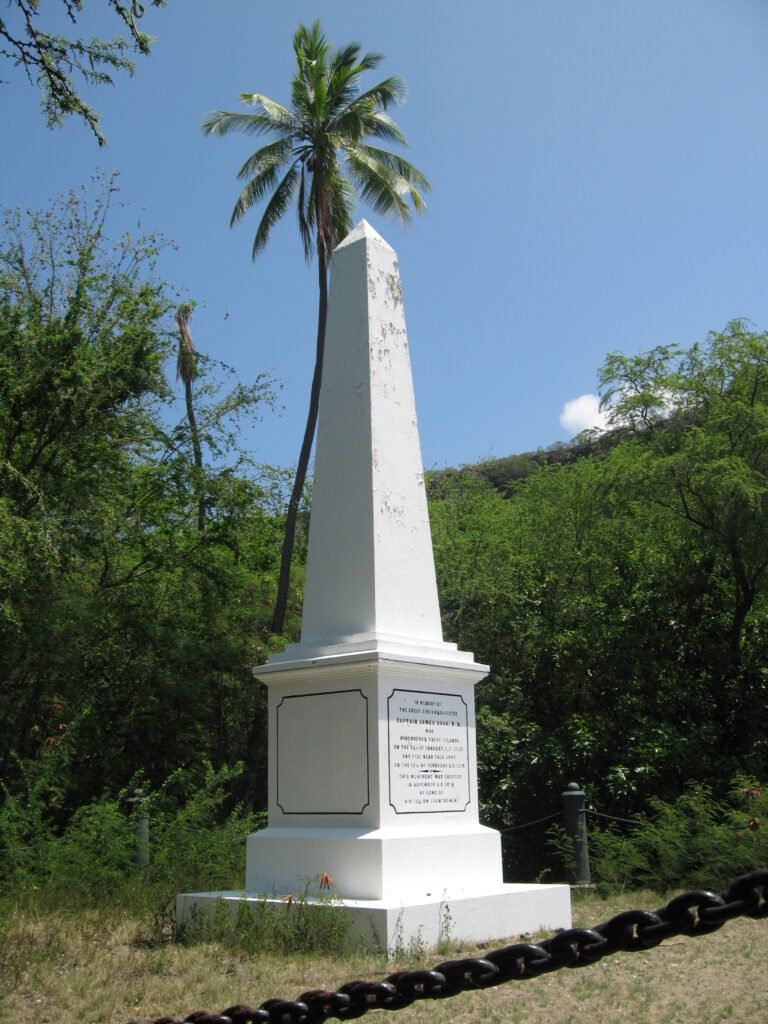
Kealakekua Bay is not a place to rent any kayak you find and paddle wherever you like. The bay is both a State Historical Park and a Marine Life Conservation District, with specific vessel permits and landing rules around Kaʻawaloa and the Captain Cook Monument.
Rules checked October 23, 2026: all vessels transiting Kealakekua Bay need a State Parks permit. Visitors who rent a kayak do not apply for the permit themselves, but must confirm that the rental vessel has a valid permit. Independent permitted vessels may transit the bay but generally may not land at Kaʻawaloa Flat.
First decide what you want to do
| Goal | Practical route | Important limit |
|---|---|---|
| See the bay and historic sites from shore | Visit the Nāpōʻopoʻo section of the state park | Do not enter Hikiau Heiau; view respectfully |
| Visit Kaʻawaloa/Captain Cook Monument by land | Hike the historic Kaʻawaloa Trail | Long, exposed route; no restroom at Kaʻawaloa |
| Kayak and land at Kaʻawaloa | Use one of the State Parks-permitted guided kayak operators | Ordinary private/rental kayaks cannot simply land there |
| Paddle through the bay without landing | Use a vessel with a valid permit | Confirm permit status and legal launch arrangements |
The park is free, but vessel access is regulated
Kealakekua Bay State Historical Park currently lists daily hours of 7 a.m. to 8 p.m. and no entrance fee. The Nāpōʻopoʻo side includes views across the bay, Hikiau Heiau, and the historic shoreline.
Launching from the historic Nāpōʻopoʻo wharf is prohibited. Restroom facilities are on the Nāpōʻopoʻo side; do not assume facilities exist at Kaʻawaloa.
How kayak permits work
State Parks requires permits for vessels including kayaks, boats, canoes, stand-up paddleboards, and inflatables that transit the bay. If you own a vessel and intend to paddle independently, follow the current noncommercial permit application process and allow processing time.
If you rent a kayak, ask the rental provider to confirm that the specific vessel is permitted for Kealakekua Bay. A rental receipt is not the same thing as a State Parks vessel permit.
Permitted private or rental vessels are not authorized to land at Kaʻawaloa Flat merely because they can transit the water. State Parks currently identifies permitted commercial guided kayak tours as the water-based option for visitors who want to land at the Captain Cook Monument area.
Do not assume you can launch from Nāpōʻopoʻo
The park specifically prohibits launching from Nāpōʻopoʻo wharf. Confirm the legal launch point with the permit holder or authorized operator before transporting a kayak to the bay.
This is one reason a guided trip can be simpler for a first visit: the permitted operator handles the legal launch and landing framework, while you can focus on whether the physical demands and water conditions suit you.
Snorkeling is good only when the conditions and your skills fit
The Division of Aquatic Resources describes exceptional coral and fish diversity near Kaʻawaloa Cove, but also notes that conditions in the bay can become dangerous during high surf and Kona storms. There are no lifeguards at Nāpōʻopoʻo Beach.
If snorkeling is part of the trip, use our first-time snorkeling guide to assess swimming ability, instruction, equipment, and buddy planning. A famous reef is not automatically a beginner site.
Protect the Marine Life Conservation District
Kealakekua Bay is a Marine Life Conservation District. Regulations prohibit taking or injuring marine life in protected areas except for limited permitted fishing in the applicable subzone, taking or altering coral and geological features, and fish feeding.
Keep fins and hands off coral, do not feed fish, and carry out everything you bring. If an operator encourages touching wildlife or standing on the reef for a photo, choose a different operator.
Spinner dolphins need distance too
Hawaiian spinner dolphins use sheltered bays for daytime rest. Federal rules prohibit swimming with, approaching, or remaining within 50 yards of Hawaiian spinner dolphins in applicable nearshore waters around the main Hawaiian Islands.
If dolphins enter the area, do not paddle or swim toward them for a closer look. A responsible tour should change guest behavior rather than pursue the animals.
Understand the cultural landscape
Kealakekua was a major Hawaiian cultural and political center long before the arrival of Captain James Cook in 1779. Hikiau Heiau remains sacred. State Parks asks visitors not to climb onto the heiau.
The Captain Cook Monument marks one part of a much larger story. Give time to the Hawaiian history of Kealakekua rather than treating the bay only as a snorkeling destination or monument photo stop.
Guided kayak, hike, or boat?
- Guided permitted kayak: best when you want the paddle and legal landing at Kaʻawaloa with an operator handling the vessel permit framework.
- Kaʻawaloa Trail: best for experienced hikers prepared for a long exposed descent and climb, carrying enough water and everything back out.
- Boat/snorkel tour: compare harbor departure, group size, water entry, wildlife practices, and whether the trip lands anywhere.
- Shore visit: useful for history and bay views without committing to a water or hiking outing.
Before booking a commercial outing, use our sustainable tour evaluation guide and verify the operator’s current authorization with State Parks when required.
Fit it into a west-side day
Kealakekua pairs naturally with a South Kona or Kona-based day. Avoid adding Hawaiʻi Volcanoes National Park or another cross-island destination afterward. A water trip, lunch, and one nearby cultural or coffee stop can be a full day.
Our seven-day Hawaiʻi Island itinerary helps keep west-side experiences together before moving east.
The Kaʻawaloa hike is a real outing, not a shortcut
State planning documents describe the Kaʻawaloa Road route as roughly 2 miles one way, unimproved and steep, with grades reported in the 11–22 percent range. There is no trailhead parking lot and no restroom on the trail or at Kaʻawaloa Flat. Anyone choosing the hike should carry water and other supplies for the climb back, tell someone the plan, and assess the route against heat and fitness rather than treating it as the free alternative to a boat tour.
The State Historical Park page remains the best starting point for legal access. If your main goal is snorkeling rather than the hike itself, compare a permitted guided kayak or appropriate boat trip instead of committing to a steep route simply to reach the water.
Fit Kealakekua into the Kona side of the trip
Keep this outing on a west-side day with the Hawaiʻi Island base guide, transport guide, and budget framework. If snorkeling is the priority, use the snorkeling preparation guide before choosing an operator or water entry.
Official sources to recheck
Use the State Historical Park page, State Parks permit guidance, and Division of Aquatic Resources bay guidance before your visit.
Featured photograph: Captain Cook Monument at Kealakekua Bay. Surfsupusa / Wikimedia Commons. Public domain.