A Kauaʻi budget is easier to control when you choose the base and transport plan before filling the calendar. The island’s road layout means location affects both driving time and cost, so a lower room price is not automatically the cheaper trip.
This guide uses a repeatable budgeting framework rather than live hotel or rental-car averages. Replace every example with quotes for your dates, group size, room needs, and cancellation terms.
Build the budget in the right order
- Choose one or two possible accommodation areas.
- Choose the transport plan for each area.
- Add the fixed reservations you actually want.
- Build a realistic food pattern.
- Add flexible money and separate refundable holds.
1. Compare the base before the property
Use our where-to-stay Kauaʻi guide to compare Kapaʻa/Wailua, Poʻipū/Kōloa, Princeville/Hanalei, Līhuʻe, and Waimea.
Put your three priority outings on a map. A property near your usual route can save fuel, parking, and time even when its nightly rate is higher. Conversely, a six-night stay in one well-chosen base may cost less than two shorter stays once a second cleaning fee or another transfer is added.
2. Price the full transport plan
For many first trips, a rental car is the largest transport line. Compare it against a partial rental or a deliberately car-light trip using our Kauaʻi rental car guide.
The Kauaʻi Bus currently lists general fares of $2 per mainline ride, $0.50 per shuttle ride, and a $5 day pass. However, bus routes and recovery service can change, and Routes 900/950 were still suspended in the county’s October 20 update. Budget public transit only after confirming the routes you will use.
For a rental, add the complete quote, accommodation parking, fuel, and any attraction parking. For no-car days, add airport transfers and any taxis or tours needed to fill route gaps.
3. Add Hāʻena correctly
Hāʻena is a good example of why a destination fee should be treated as a complete outing cost. You may choose parking plus entry, shuttle plus entry, or another permitted arrival arrangement. The price should be recorded together with the transport needed to reach the shuttle or park.
Use our Hāʻena reservation guide and the current Go Hāʻena booking page when you are ready to price the day. Do not add a rental-car parking cost to a shuttle plan unless you actually need paid parking elsewhere to catch the shuttle.
4. Decide how many paid gardens and tours you want
Kauaʻi has excellent paid experiences, including botanical gardens and guided activities, but a useful trip does not require one every day. Choose the experiences that add something you cannot reproduce on your own.
If Allerton Garden or Limahuli Garden is a priority, price the actual tour and date you want. If the rest of the week is built around towns, open beaches, and coastal walks, keep those lower-cost days in the plan instead of replacing them with extra bookings.
5. Budget for current access, not an old itinerary
Storm recovery can change where you spend money. Access update checked October 27, 2026: DLNR reopened the first Waimea Canyon Lookout on October 24 during daylight hours, but the rest of Waimea Canyon State Park and Kōkeʻe State Park remain closed. Parking fees still apply; entry fees are temporarily waived. Official notices also retain a Kōkeʻe Road closure, so confirm the permitted approach and posted road controls before planning the drive. Access to Uluwehi Falls remains closed. Do not prepay a tour or build a fuel budget around a closed area.
Our seven-day Kauaʻi itinerary was designed around the currently available alternatives. Recheck official access close to travel because reopening can change the best use of your days.
6. Make the food budget match your accommodation
A kitchenette is useful only when you use it. Decide how many breakfasts and simple meals you want to prepare, then price groceries for those meals. On long North Shore or South Shore days, assume you may buy lunch away from the room.
Write the meal pattern into the itinerary first. It is easier to budget “breakfast in room, lunch near outing, dinner near base” than to choose an arbitrary food allowance disconnected from where you will be.
A fictional six-night example
These figures are an example of the math only, not current prices.
| Category | Fictional amount |
|---|---|
| Accommodation total | $1,950 |
| Rental car, parking, fuel | $780 |
| Hāʻena and two paid experiences | $430 |
| Food | $850 |
| Flexible money | $240 |
| Total | $4,250 |
If a hotel quote already includes parking, do not add it again. If a tour includes transport, compare that cost against the driving it replaces. If a refundable deposit is expected back, list it separately from the final trip total.
Where to cut without making the trip worse
- Choose one base when the move does not clearly save enough driving.
- Cluster outings by region rather than crossing the island repeatedly.
- Use Hāʻena shuttle arrangements when they fit better than paying to drive and park.
- Choose a few paid priorities and leave room for town, coastal, and rest days.
- Use the accommodation kitchen for meals you actually want to prepare.
Use the free hotel and trip-budget worksheets to replace the fictional example with your own quotes.
Use primary sources for the lines most likely to change
Check the County Transportation Agency for current bus fares and service, Hawaiʻi State Parks notices for closures and reopenings, and Go Hāʻena for the reservation package you would actually buy. Put those live amounts into the worksheet rather than relying on a previous trip estimate.
A useful booking order
Choose the base, price transportation, secure Hāʻena if it is a priority, then add gardens or tours. This order prevents a cheap room from forcing expensive transport or a sold-out reservation from leaving a prepaid activity plan that no longer makes sense.
Sources and review
Budget framework reviewed October 23, 2026. Current transit and access notes were checked against County of Kauaʻi and Hawaiʻi DLNR notices. Accommodation, rental, food, and activity prices must be checked for your travel dates.
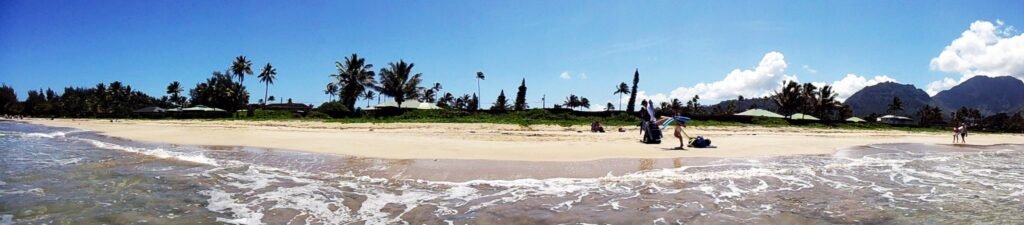
Featured photograph: Hanalei Bay, photographed in 2012. Cymru.lass / Wikimedia Commons, CC BY-SA 3.0.