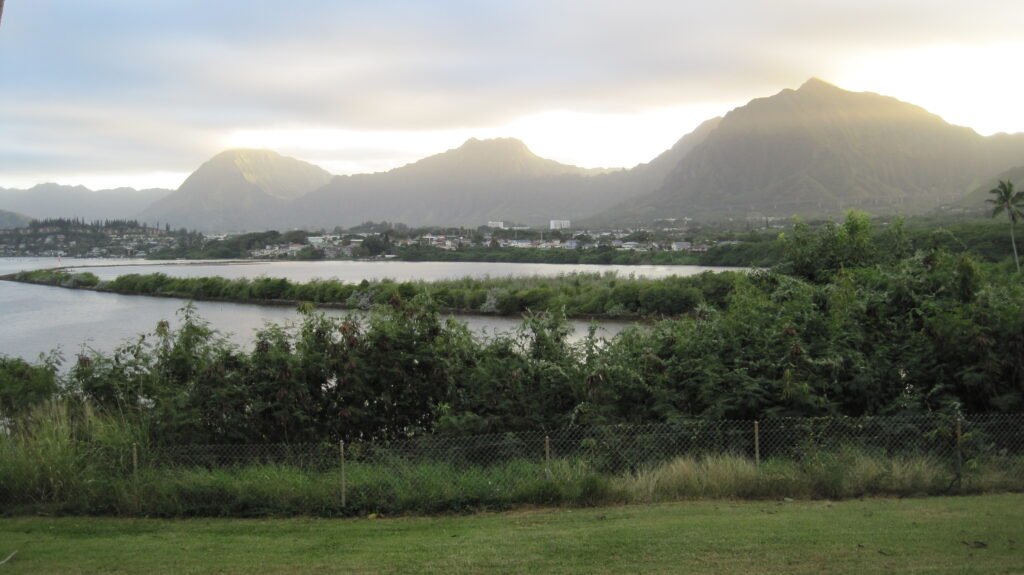
If you have an hour on windward Oʻahu and want to understand how a Hawaiian fishpond feeds people, request a walking tour with Paepae o Heʻeia. If you can set aside a morning to work outdoors and do the job the crew needs that day, ask about volunteering. Both begin with a reservation. The first choice to make is what you can offer in time, attention and physical effort.
What you’ll see in the wall and the gates
At Heʻeia, a stone wall called a kuapā encloses about 88 acres of brackish water. Look along the wall and you’ll find openings that matter as much as the stones. Four mākāhā, or sluice gates, face the sea, and three face the stream. Together they regulate the exchange of salt water and fresh water. The pond was built to raise young fish to maturity. A question worth bringing to a tour is how the people who care for the pond decide what to do as the tide changes. Explore the fishpond through its stewards’ account.
Choose the walking tour if you’re coming to learn
Paepae o Heʻeia offers an hour-long guided walk for all ages. That makes it the easier choice for families with young children, visitors interested in Hawaiian aquaculture, and groups with only part of a day on this side of the island. If walking on an uneven surface, standing for an hour or keeping a stroller with you would affect your visit, describe that when you request a time. Ask what the route will be for your group.
On November 2, 2026, the posted nonresident rate was $80 for up to four people, then $20 per additional person, with children three and under free. For two visiting adults, the posted minimum comes to $40 per person. For four adults it comes to $20 each. The stewards also list separate kamaʻāina and military rates. Confirm the price and meeting details when you reserve. Request a tour and check current prices.
Choose a workday if you can stay for the shift
Saturday community workdays typically run from 8:30 a.m. to noon on the second and fourth Saturdays of most months. The stewards describe the available work as suitable for ages 12 and up. A crew might move rock for the wall, haul materials through water or remove invasive mangrove. An RSVP and email confirmation are required, and some dates fill months ahead.
Most weekday mornings also have a smaller working crew, generally from 8 a.m. to noon, by confirmed arrangement. Saturday volunteers are offered lunch and asked to bring a bowl and utensil. Weekday shifts do not include lunch. If only one person in your group can commit to the work or the timing, give the stewards an accurate headcount. See the workday details and RSVP instructions.
What to pack, and where to meet
Covered shoes or tabi are required for volunteer work. Bring a refillable water bottle, sun protection and clothes that can get dirty. A towel and a dry change of clothes make the trip back easier. Going to another outdoor site afterward? Bag the wet shoes and clean them before you wear them somewhere else. See our guide to cleaning footwear between Hawaiʻi sites.
Meeting instructions for volunteer events arrive the week of the activity. Use those directions instead of a generic map pin for the pond or a nearby park. If no date is confirmed, keep that morning open for another plan. A family with younger children could arrange the guided walk for a different day, or visit Hoʻomaluhia Botanical Garden.
Photograph of Heʻeia Fishpond by Joel Bradshaw, released to the public domain. View the original on Wikimedia Commons.
